Ships in 4 days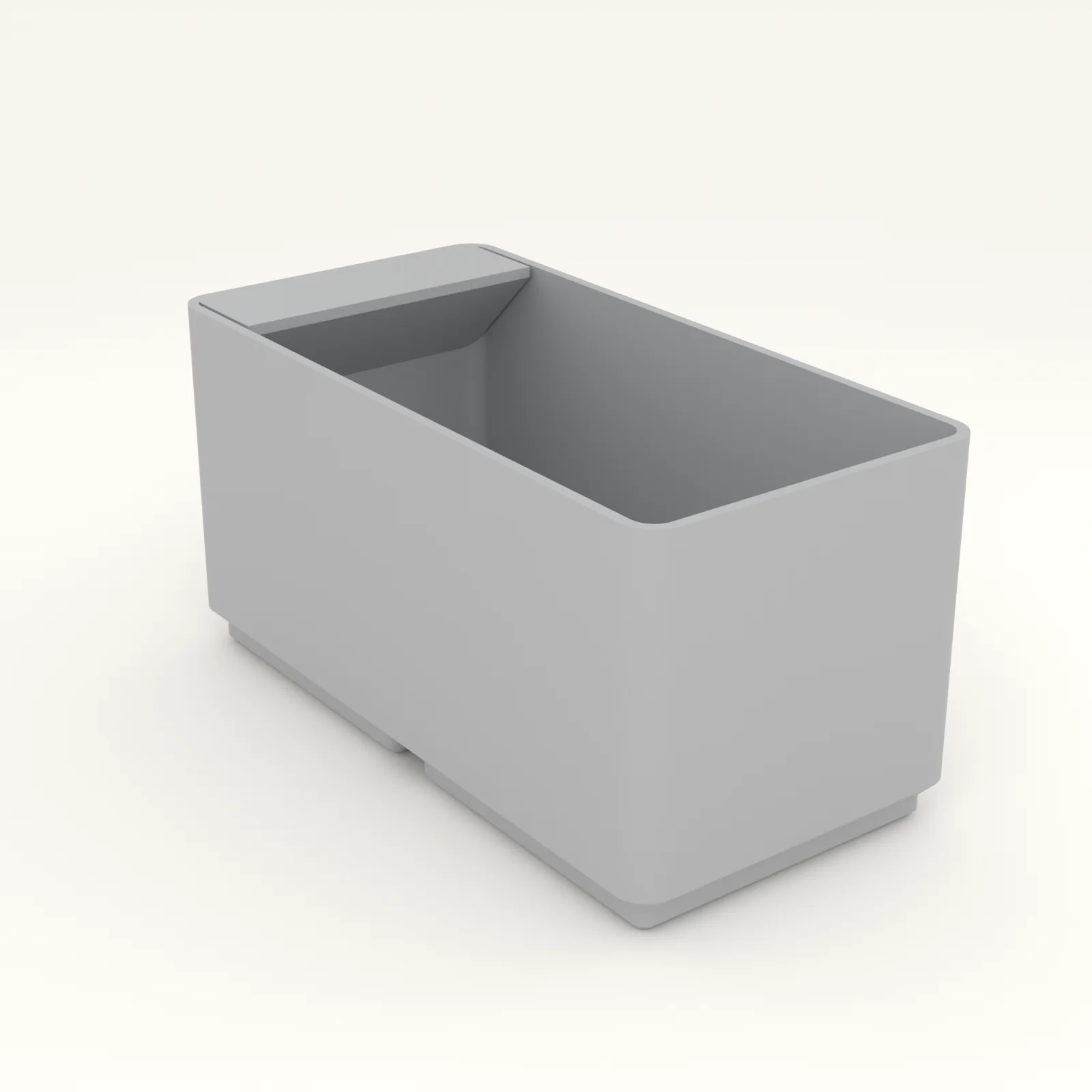
Guide
A drawer system built on one number. Every bin is a multiple of 42 mm across and 7 mm tall, and every baseplate is a field of 42 mm sockets. Here is what that means for your drawer.
The 42 mm grid is a storage system built on a single cell. Across the drawer, everything is a multiple of 42 mm. Up the side of a bin, everything is a multiple of 7 mm. Bins have stepped feet that drop into matching sockets in a baseplate, so a bin can go anywhere on the plate, come out with one finger, and go back somewhere else.
The dimensions come from an open specification that a community of makers maintains and publishes. Anyone can make parts to it, which is why bins and plates from different makers mix. Our bins and our drawer baseplate are built to those published numbers. Keyedworks is not affiliated with any grid system's creators, and we call it what it is, the 42 mm grid.
A bin's footprint is counted in cells. Each cell is 42 mm, and each bin body is half a millimeter smaller than its cells so neighbors never bind.
| Footprint | Grid size | Bin body, about | Typical contents |
|---|---|---|---|
| 1 x 1 | 42 x 42 mm | 41.5 x 41.5 mm | Screws, nuts, SD cards, earbuds, dice |
| 1 x 2 | 42 x 84 mm | 41.5 x 83.5 mm | Pens, batteries, drill bits, USB sticks |
| 1 x 3 | 42 x 126 mm | 41.5 x 125.5 mm | Pencils, long bits, chopsticks, coiled cables |
| 2 x 2 | 84 x 84 mm | 83.5 x 83.5 mm | Tape measure, glue, small tools |
| 2 x 3 | 84 x 126 mm | 83.5 x 125.5 mm | Hand tools, chargers, kitchen gadgets |
| 3 x 3 | 126 x 126 mm | 125.5 x 125.5 mm | Bulky items, a stack of notebooks |
Grid bins come in all six, starting at $6 for a low 1 x 1.
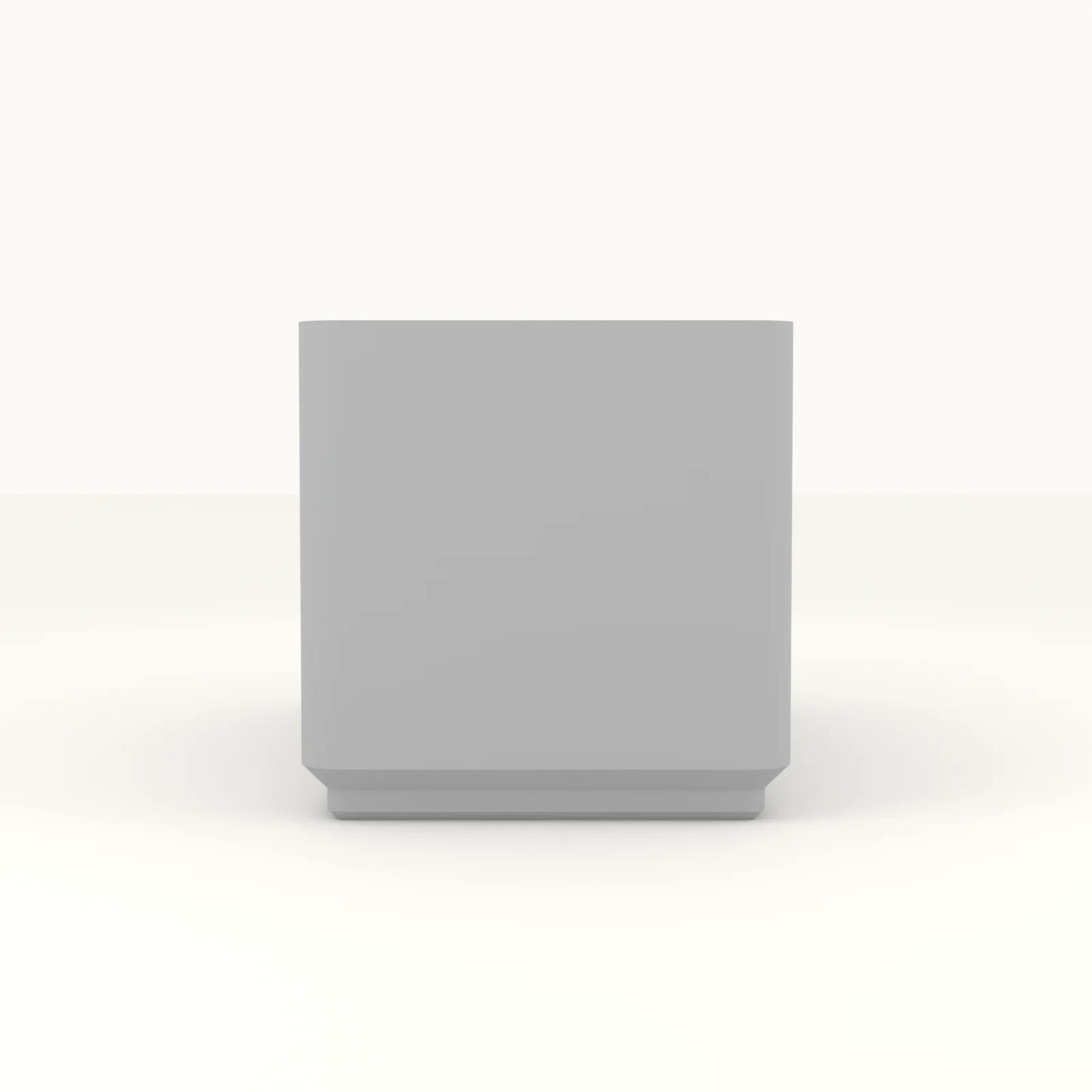
Heights are counted in 7 mm units, and the foot counts inside the first unit. We print three:
Pick heights against your drawer's inside height. A bin should clear the cabinet face with the drawer closed, so subtract a few millimeters from the inside height and choose the tallest unit count under that number. A 70 mm deep drawer takes tall 63 mm bins. A 50 mm drawer takes standard 42 mm bins.
The foot of a bin is a stepped, chamfered profile about 4.75 mm tall. The baseplate is a field of sockets shaped as the inverse of that foot, with a quarter millimeter of clearance per side, so a bin drops in, self centers and stays put when the drawer slams. Our baseplate is 4.65 mm thick.
Bins also stack without a plate. The feet of an upper bin drop about 1.6 mm into the open top of the bin below, which locates the stack. It is a locating fit, not a lock, so a stack in a drawer stays square but lifts apart easily.
Our baseplate keeps a 2 mm solid rim around the outer sockets and is generated 1 mm under your measurements, so the cell count is the inside size minus 5 mm, divided by 42, rounded down.
| Inside size | About, inches | Full cells | Grid length | Gap each side if centered |
|---|---|---|---|---|
| 250 mm | 9.8 | 5 | 210 mm | 18 mm |
| 300 mm | 11.8 | 7 | 294 mm | 1 mm |
| 350 mm | 13.8 | 8 | 336 mm | 5 mm |
| 400 mm | 15.7 | 9 | 378 mm | 9 mm |
| 450 mm | 17.7 | 10 | 420 mm | 13 mm |
| 500 mm | 19.7 | 11 | 462 mm | 17 mm |
| 600 mm | 23.6 | 14 | 588 mm | 4 mm |
That last column is why the edge option exists. A stock plate in a 450 mm drawer leaves 13 mm a side, and the plate shuffles every time the drawer opens. Choose Fill the edges and the plate is extended as solid floor right out to 1 mm under your measurements, so neither plate nor bins can move. Choose Center the grid if you want the plate exactly the size of its cells, for example to lift it out with the bins on it.
Our printer prints about 300 mm in one piece. A plate bigger than that in either direction prints as tiles that split on a cell line, in both directions if needed, with small dovetails in the bottom of the lattice that line the tiles up. They are alignment keys, not a structural joint: the drawer holds the tiles together, and from above the seam reads as one more grid line.
The grid shines with many small things. For a kitchen utensil drawer full of long spatulas and ladles, a drawer divider kit with three or four long bays usually works better, because the bays are cut to the drawer and can be any length up to the full drawer. See kitchen drawers for that comparison, and workshop drawers for where the grid wins.
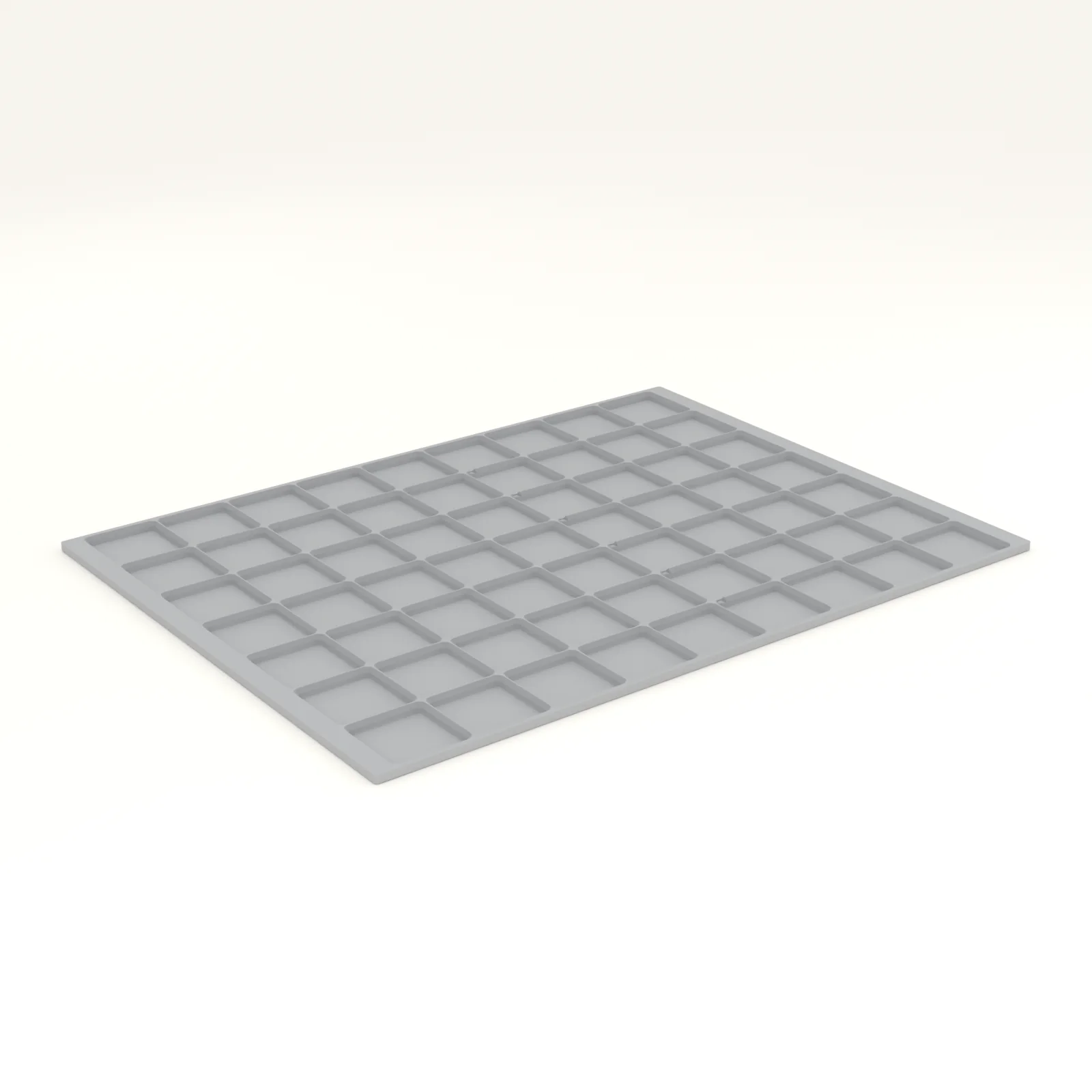
A 42 mm grid baseplate cut to your drawer's inside size, so the bins fill the drawer edge to edge.
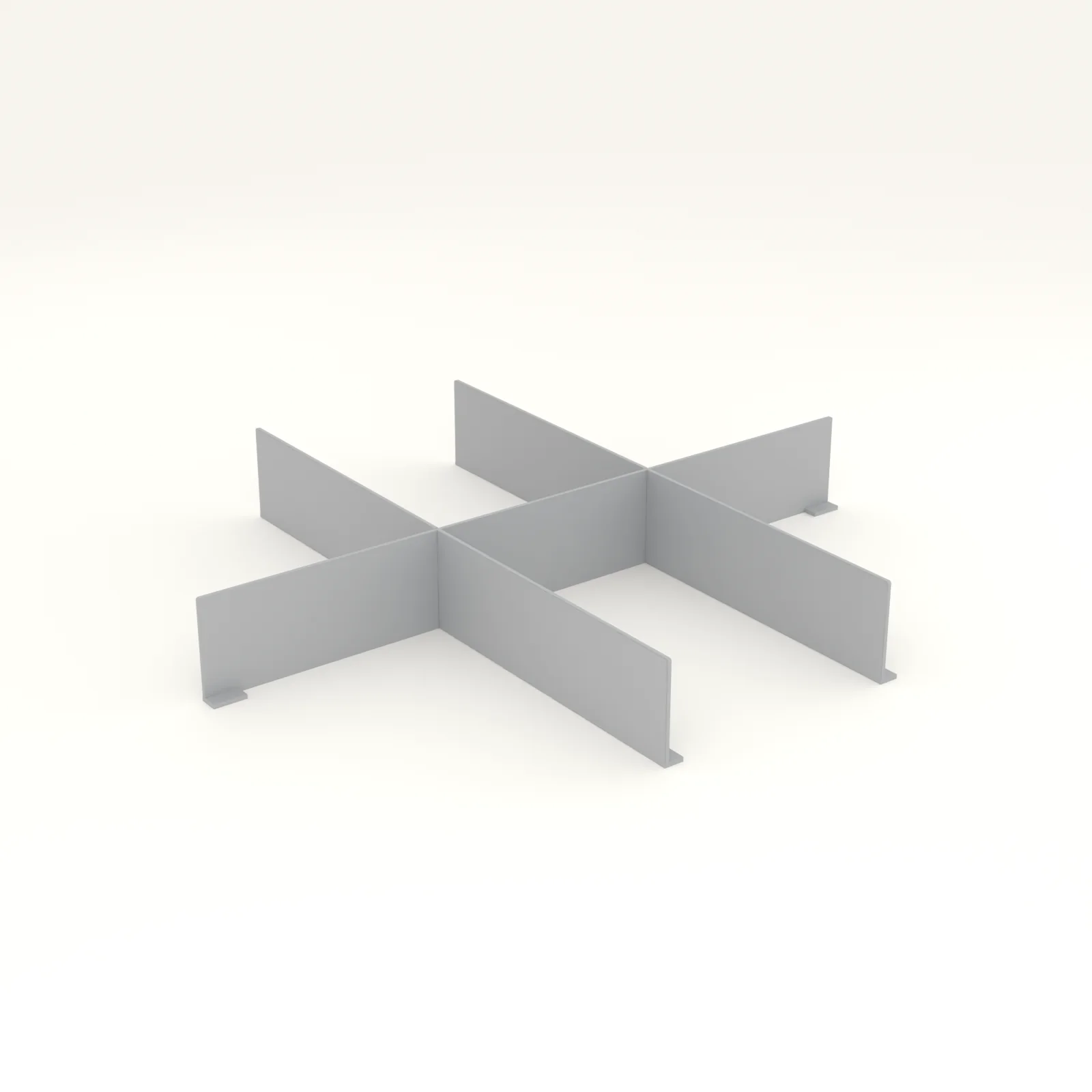
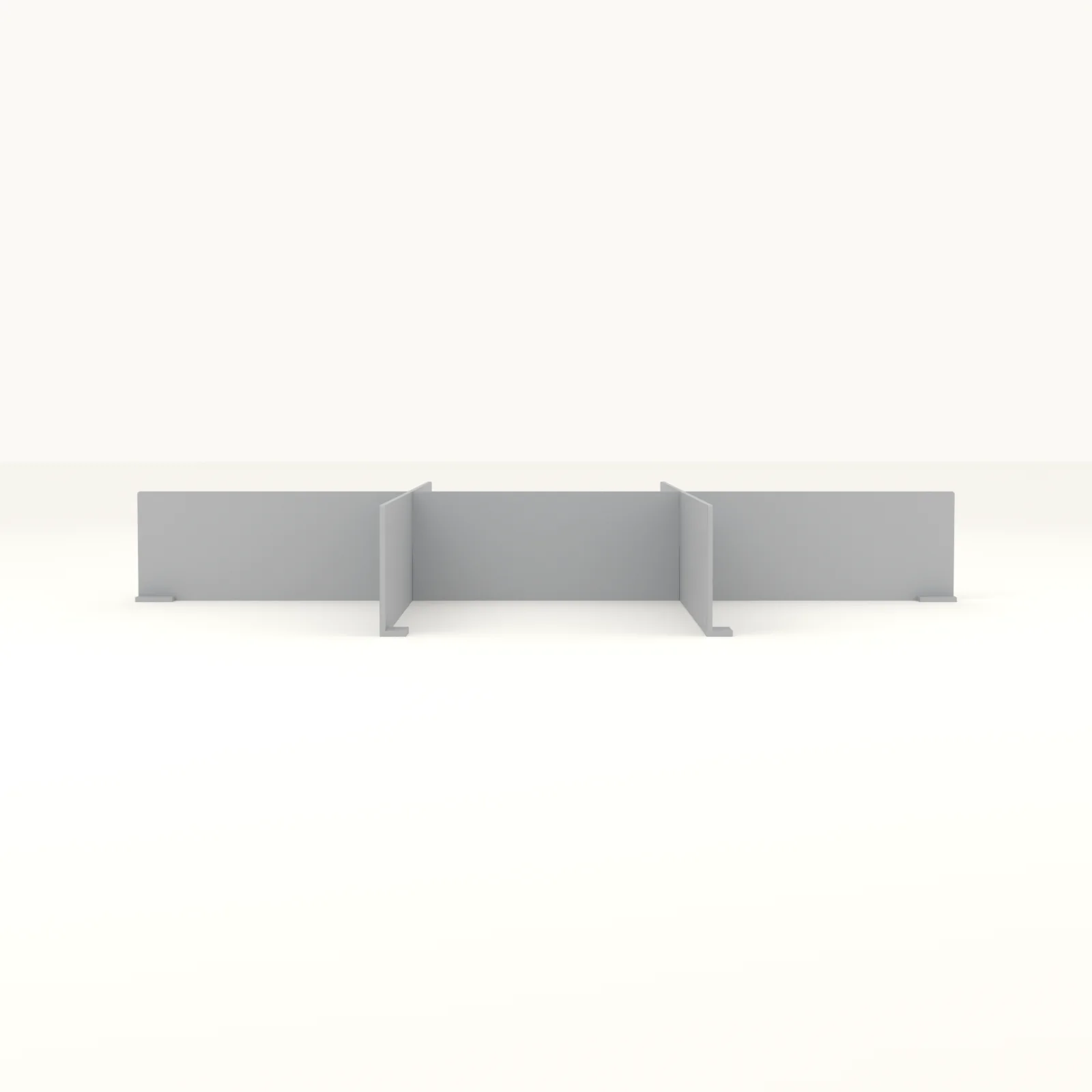
Dividers sized to your drawer's inside measurements, in the bay layout you choose.
If the plate follows the common 42 mm grid profile, yes. Our bins are built to the published open dimensions for the grid: a 42 mm pitch, 41.5 mm bin bodies and the standard stepped foot. Keyedworks is not affiliated with any grid system's creators.
Bins built to the same open profile seat in our sockets. Bins with a nonstandard foot, for example weighted or magnetic bases, may not, and we do not make magnetic parts.
It is a practical cell for drawer contents: a 1 x 1 holds screws or an SD card stack, a 2 x 2 holds a tape measure, and drawers between 300 and 600 mm wide fit 7 to 14 cells. It is also the size the open grid community settled on, which is why parts from different makers mix.
No. Bins sit flat on any surface and stack. A baseplate locks them into the grid so they do not slide when the drawer opens, and a plate cut to your drawer fills the leftover space too.
Every baseplate is cut to the drawer you enter, so you need two numbers: inside width and inside depth at the floor. The measuring guide shows where the tape goes.
Not sure what to order? Email [email protected] with your measurements and a sentence on what goes in it. A person answers on business days.