Made to your measurements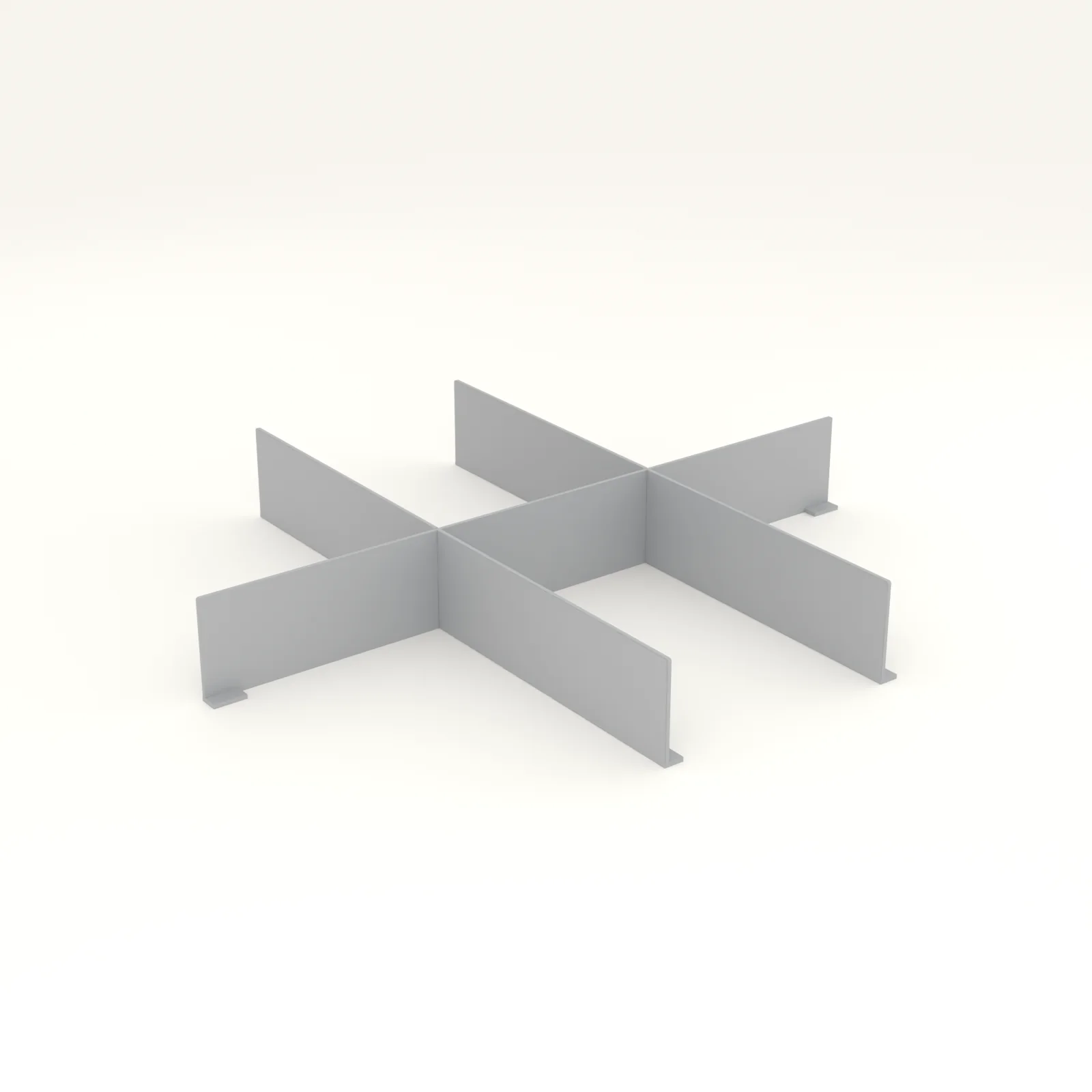
Drawer Divider Kit
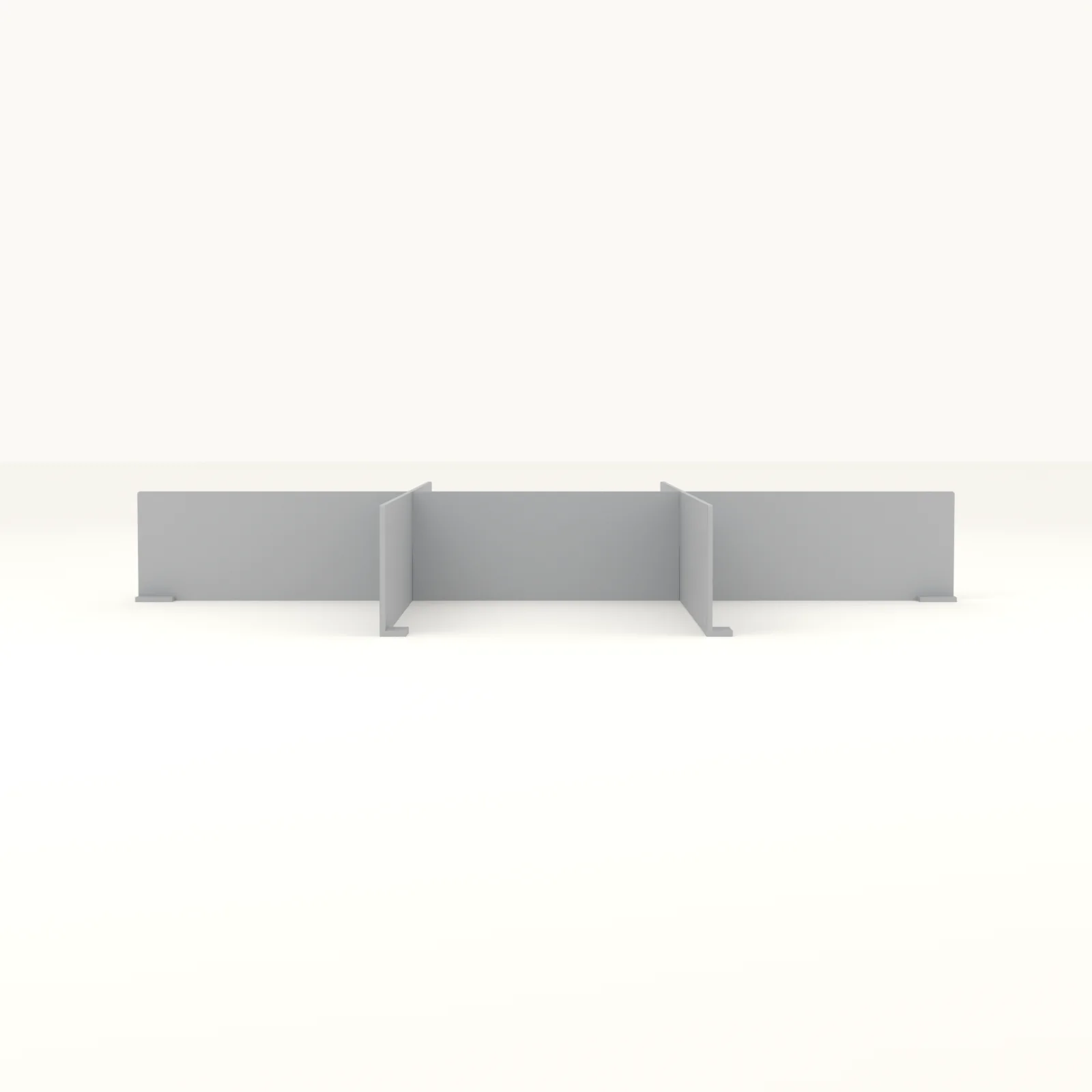
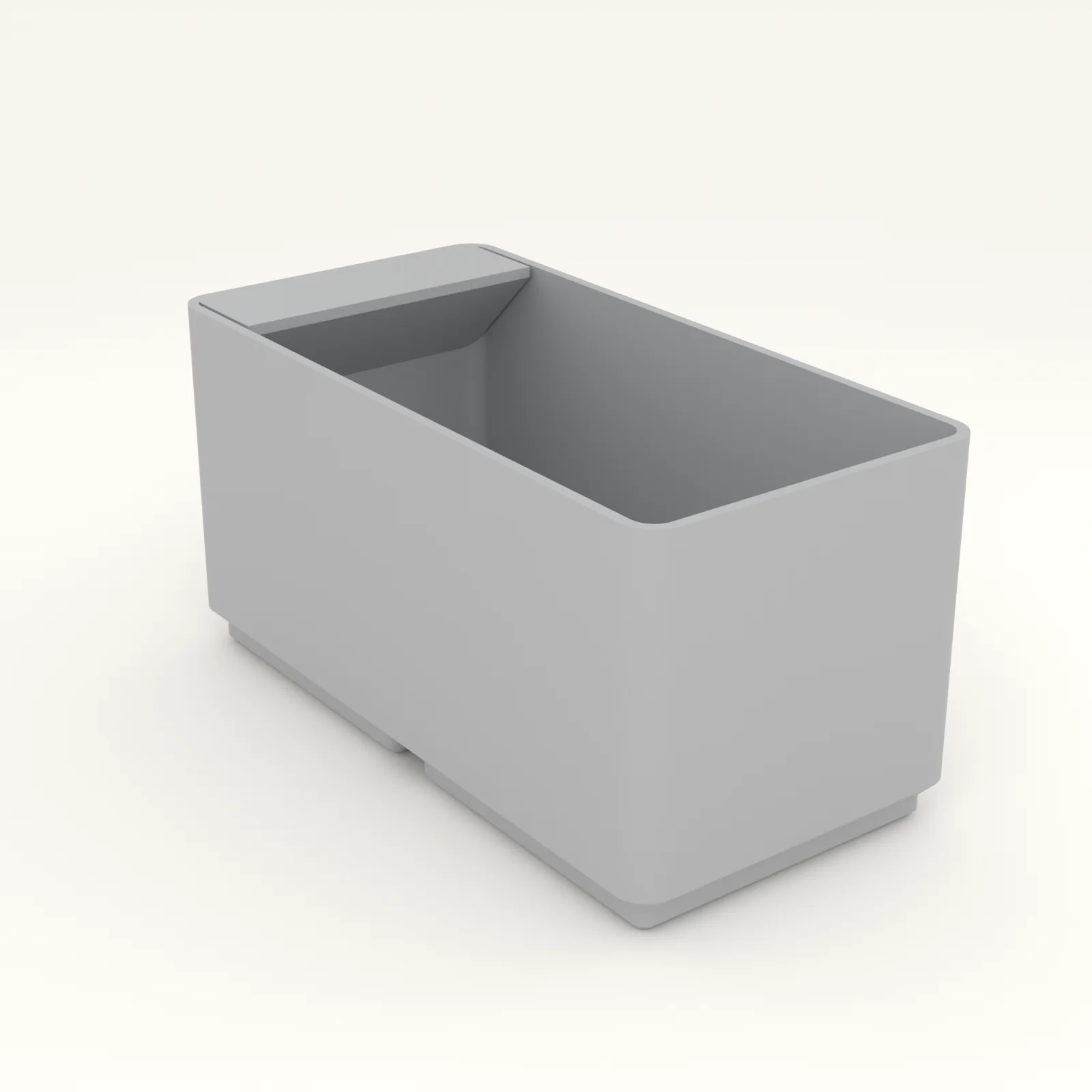
Dividers sized to your drawer's inside measurements, in the bay layout you choose.
Use case
The utensil drawer is the one everybody opens and nobody likes. A divider kit cut to its inside measurements turns it into lanes that stay where you put them.
Kitchen drawers fail in a specific way. The things in them are long and different lengths: a whisk, a ladle, a spatula, tongs, a peeler. Stock organizer trays come in two or three sizes, none of which match your drawer, so the tray slides back every time the drawer opens and the long things ride up over the walls.
Two fixes work. Cut the organizer to the inside of the drawer so it cannot slide, and give the long things long lanes.
A drawer divider kit is a set of slotted dividers cut to your drawer's inside width and depth, minus two millimeters, that press together by hand into an even grid of bays. For a utensil drawer, run the lanes front to back:
| Drawer inside width | Layout, across x down | Bay size, about | What fits |
|---|---|---|---|
| 300 mm, 12 in cabinet | 2 x 1 | 149 mm wide, full depth | Big spoons one side, everything with a handle the other |
| 375 mm, 15 in cabinet | 3 x 1 | 124 mm wide, full depth | Spatulas, spoons and ladles, tongs and whisks |
| 450 mm, 18 in cabinet | 4 x 1 | 112 mm wide, full depth | Four lanes of long tools |
| 525 mm, 21 in cabinet | 4 x 2 | 130 x 250 mm with a 500 mm deep drawer | Long tools at the back, short gadgets at the front |
Bay widths are your drawer's inside width minus two millimeters, divided evenly. If one tool is too long for a half depth bay, use one row down rather than two. The configurator divides evenly; for one wide lane and three narrow ones, email us the widths and we will quote it.
The other kitchen drawer is full of small, odd shaped things: a can opener, measuring spoons, a thermometer, clips, a pizza wheel, twist ties. Fixed lanes waste space here. A drawer baseplate cut to the drawer with Fill the edges chosen, plus grid bins sized to each thing, lets every object have its own spot and lets you rearrange the spots when what you own changes.
A typical gadget drawer, 450 mm wide and 500 mm deep, takes a plate with 10 by 11 cells. Start with:
Use the standard 42 mm height in most kitchen drawers. Under 50 mm inside, use low 21 mm bins.
Kitchen drawers close under a countertop overhang or a rail. Measure the inside height from the drawer floor to the lowest point of the drawer side or front, then check what the drawer passes under when it closes. Take ten millimeters off the lower of the two. Most utensil drawers end up with dividers 50 to 70 mm tall. The measuring guide has a full worked example for an 18 inch cabinet.
A wrap drawer usually holds four to six long boxes. Run them front to back so each one pulls straight out. Measure the longest box first; most are 300 to 350 mm, so the drawer needs that much inside depth. In a 450 mm wide drawer, a four across, one down layout gives four lanes about 112 mm wide, which take one or two boxes each with room for a roll of bags. Kits need at least two bays across, so even a narrow wrap drawer gets a center divider.
Everything in this line is printed in PLA. It is rigid, it does not mind cold, and it is fine at room temperature for years. It is not for heat. PLA starts to soften at about 55 degrees Celsius, so a kit does not go in the dishwasher, in a warming drawer or on the stovetop. Clean it with a damp cloth. The materials page has the full story, including what we will not print.
We also do not make anything meant to hold, prepare or serve food, and none of our parts carry a food contact claim. In a drawer, utensils sit beside the dividers rather than in a printed tray.
Divider kits start at from $28 and ship within 6 business days. Baseplates start at from $12 and ship within 5. Both are cut to your numbers and covered by the fit guarantee: if the piece does not match the measurements you entered, it is remade free.
Dividers sized to your drawer's inside measurements, in the bay layout you choose.
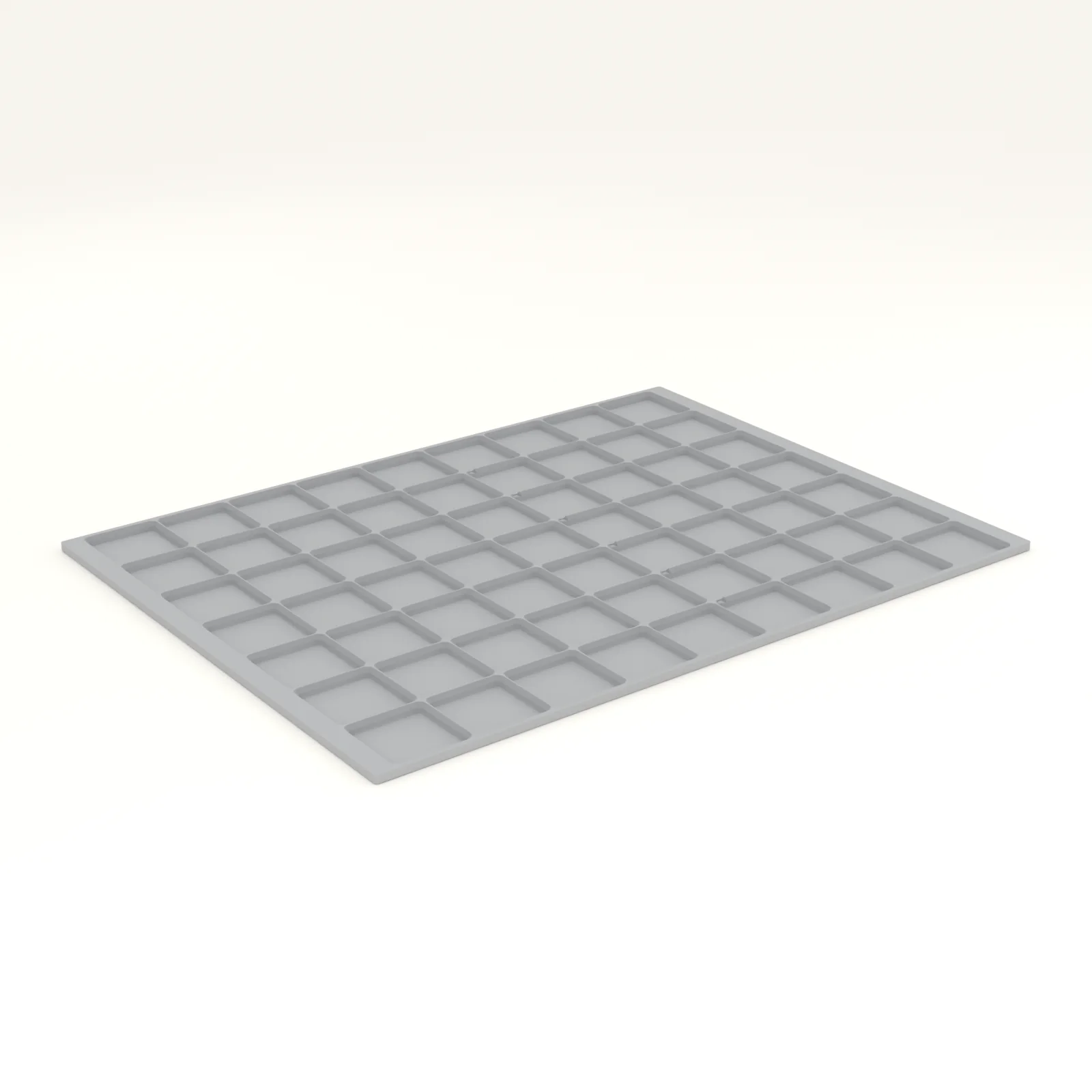
A 42 mm grid baseplate cut to your drawer's inside size, so the bins fill the drawer edge to edge.
No. PLA softens at about 55 degrees Celsius and a dishwasher runs hotter than that. Lift the kit out and wipe it with warm soapy water and a cloth.
They sit beside the dividers in a drawer the same way they sit in any plastic tray. We do not make pieces for holding, preparing or serving food, and we make no food contact claim for any of our parts.
A drawer beside an oven usually stays well under 55 degrees Celsius. A warming drawer or the drawer directly under a cooktop can get hotter. Do not put a PLA organizer in a warming drawer.
Divider kits go up to 120 mm tall, which suits lids on edge and baking sheets. Bays must be at least 40 mm wide, and two or three bays across is usually right for a pot drawer.
Not sure what to order? Email [email protected] with your measurements and a sentence on what goes in it. A person answers on business days.