Made to your measurements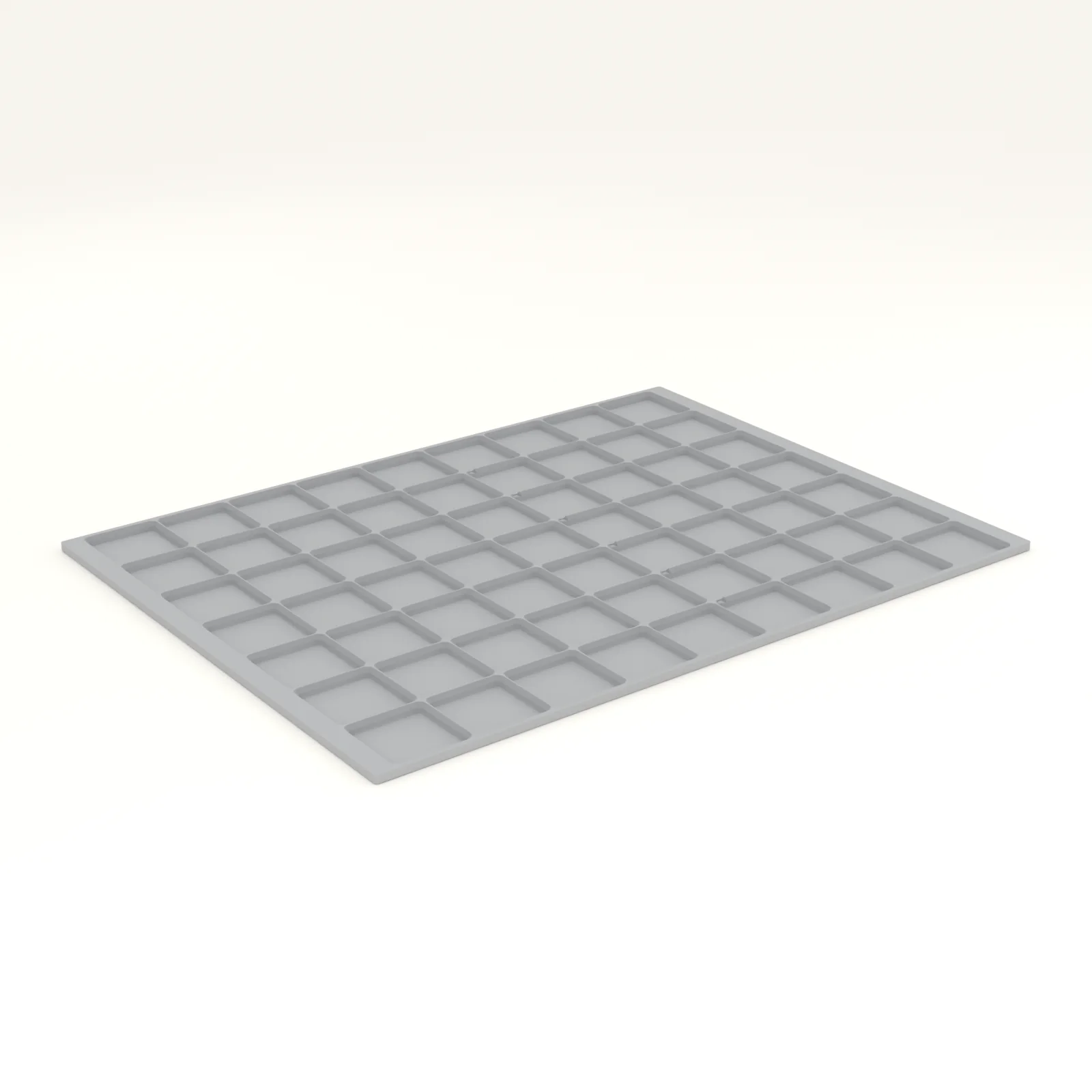
Drawer Baseplate
A 42 mm grid baseplate cut to your drawer's inside size, so the bins fill the drawer edge to edge.
Use case
Small parts drawers are where the grid earns its keep. One plate cut to the drawer, then a bin for every kind of screw, bit and fitting, rearranged whenever the collection changes.
A tool chest drawer full of hardware has three failure modes. Small boxes slide to the back every time the drawer slams. Mixed screws end up in one pile. And the drawer is never laid out for what you own now, only for what you owned when you set it up.
The 42 mm grid answers all three. A drawer baseplate cut to the inside of the drawer cannot move, because its edges are filled to within a millimeter of the drawer sides. Grid bins lock into its sockets so they cannot slide either. And because every bin is a multiple of 42 mm, you can pull a 1 x 3 and drop two 1 x 1s in its place without touching anything else.
| Contents | Bin | Height |
|---|---|---|
| Machine screws, nuts, washers by size | 1 x 1, one size per bin | Low, 21 mm |
| Wood screws, mixed lengths up to 50 mm | 1 x 2 | Standard, 42 mm |
| Drill bits and driver bits | 1 x 3, lying flat | Low, 21 mm |
| Hex keys and small screwdrivers | 1 x 3 | Low or standard |
| Electrical connectors, heat shrink, cable ties | 1 x 2 or 2 x 2 | Standard, 42 mm |
| Tape measure, utility knife, pliers | 2 x 2 or 2 x 3 | Standard, 42 mm |
| Glue, lubricant cans, marking tools on end | 2 x 2 | Tall, 63 mm |
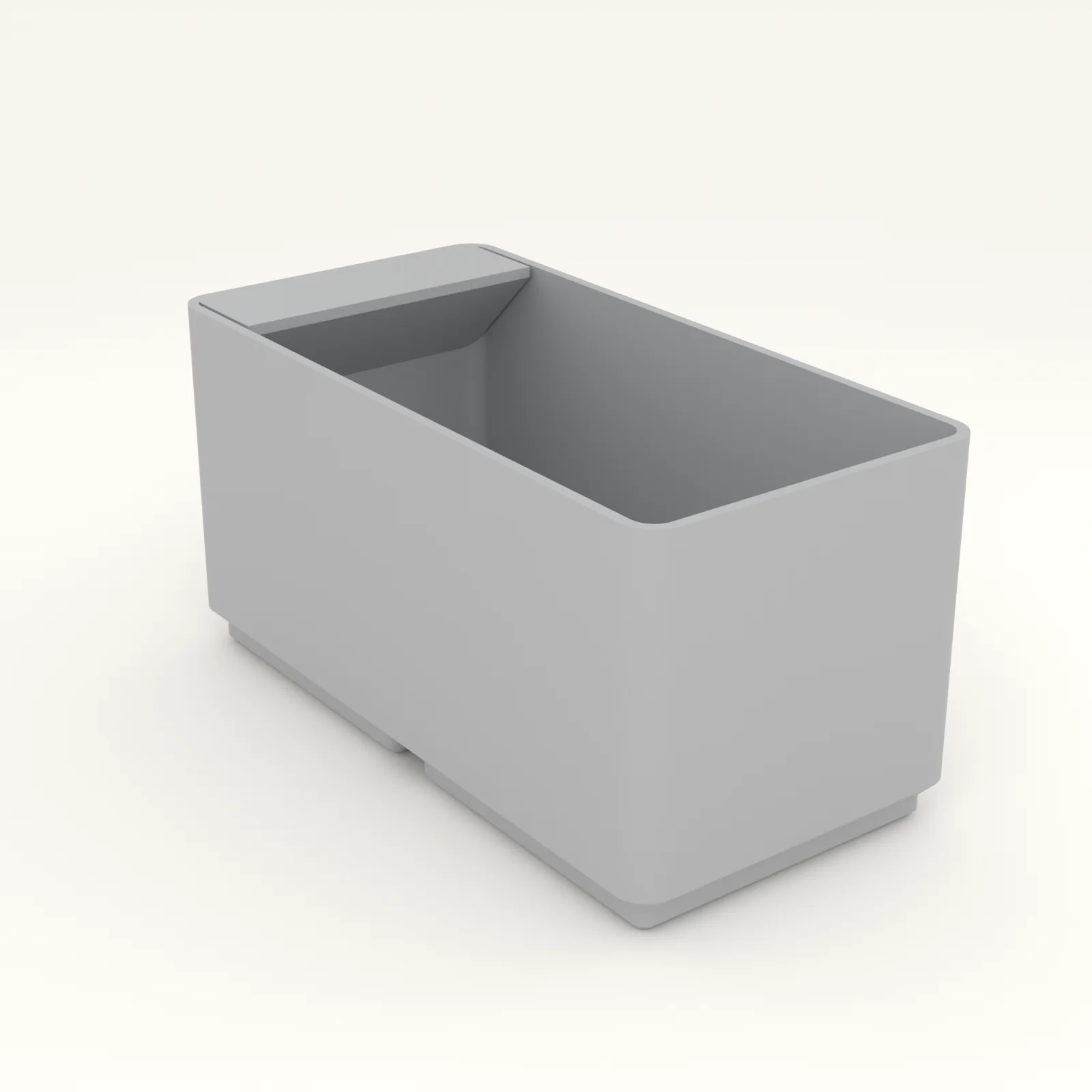
Bins have a scooped floor along the front so the last few screws roll to your fingers instead of hiding in the corners, which matters more in a workshop than anywhere else.
Tool chests vary, so measure yours at the floor. As a guide, a drawer 600 mm wide inside takes 14 cells across, which is about what a tool chest 26 inches wide outside gives you. A 450 mm wide workbench drawer takes 10. Divide your inside size minus 5 mm by 42 and round down to get the cell count. The 42 mm grid guide has a table.
Most chest drawers are deeper than our printer is wide, so the plate prints as tiles split on a cell line and lined up with small dovetail keys. In a drawer the walls hold the tiles; from above you see one grid. Pick Fill the edges so the plate meets the drawer sides and nothing shifts.
Top chest drawers are often 40 to 75 mm deep inside. Take off the 4.65 mm plate and a few millimeters of clearance, then choose:
Long tools do not suit a grid. Wrenches, files, a level, chisels in their guards, clamps: these want long bays. A divider kit cut to the drawer with four to six bays across, running front to back, gives lanes the full depth of the drawer. Mix the two approaches across drawers rather than inside one.
All of this line is printed in PLA, which is rigid and dimensionally steady at room temperature and in the cold. It softens at about 55 degrees Celsius. In an attached garage or a basement shop that is never a concern. In a metal shed or a closed truck box in summer sun it can be, and printed parts will sag. The materials page and the post on PLA in a hot car go into the numbers.
Grid bins start at $6 each and ship within 4 business days. A baseplate starts at from $12 and is priced by the cell, shown on the page as you type your drawer size. Plates are cut to your measurements, final sale, and covered by the fit guarantee. Bins are stock designs, returnable within 30 days unused.
A 42 mm grid baseplate cut to your drawer's inside size, so the bins fill the drawer edge to edge.
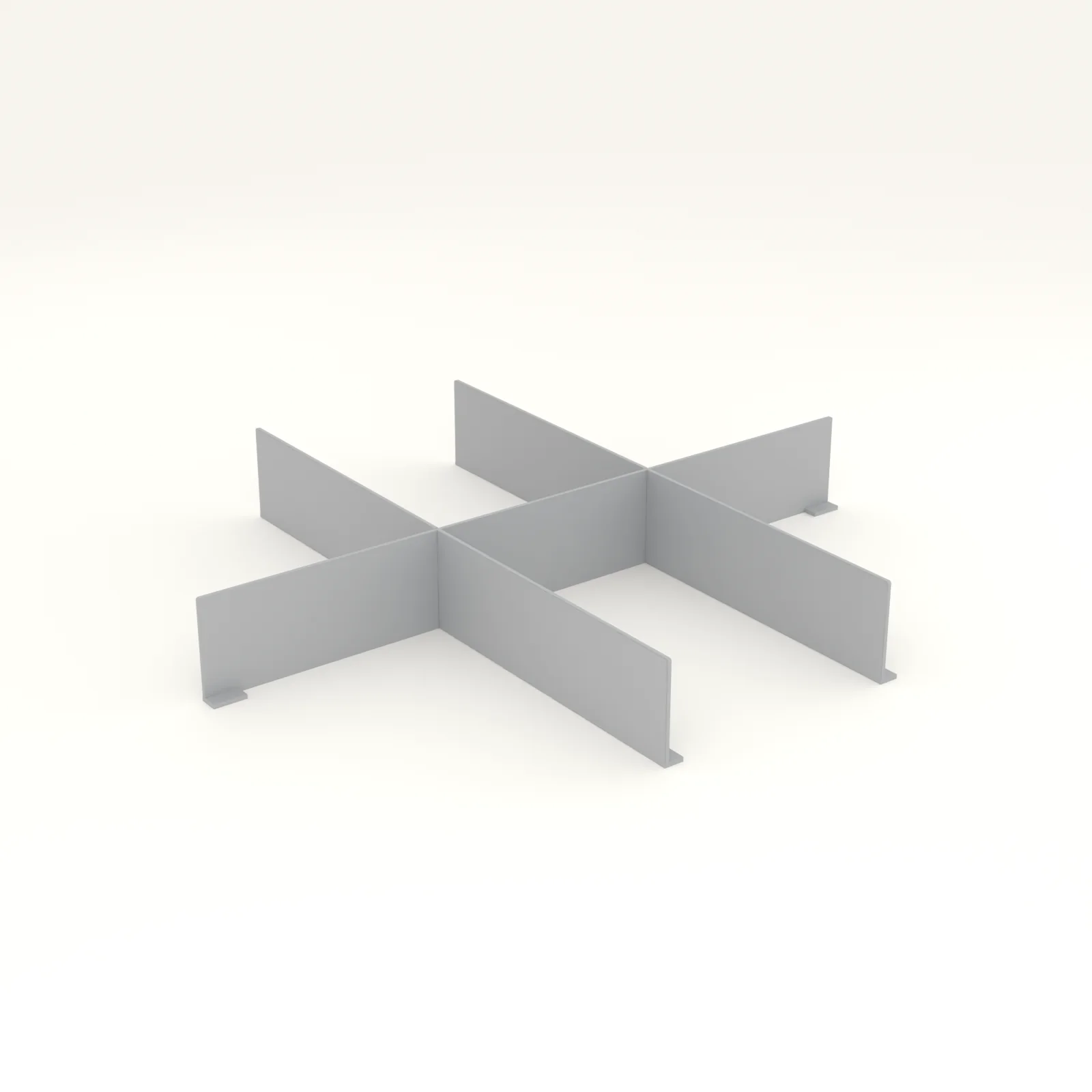
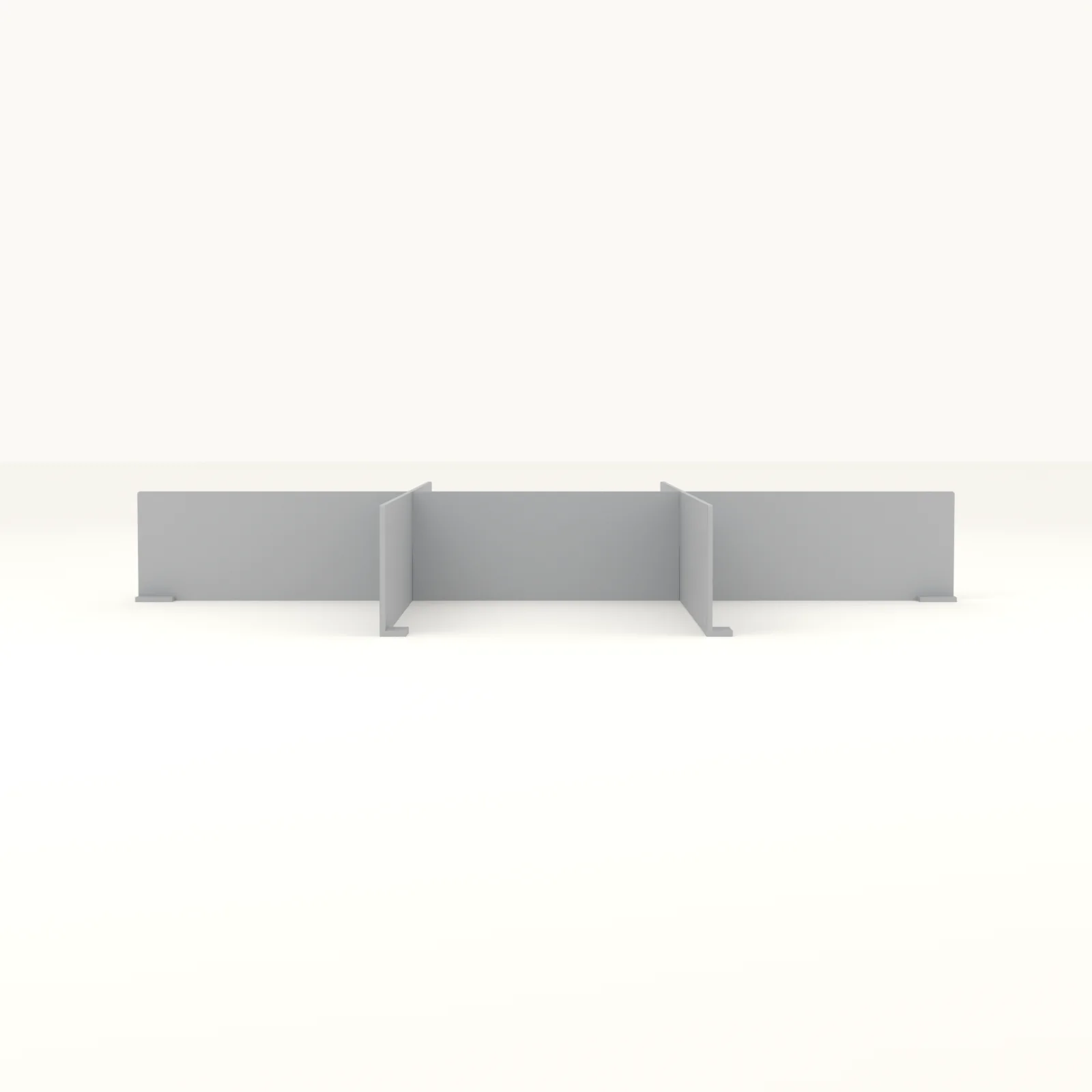
Dividers sized to your drawer's inside measurements, in the bay layout you choose.
A 1 x 1 bin full of steel screws is fine; the walls are thin but the floor carries the load, and the plate carries the bin. For a drawer of heavy sockets or wrenches, use a divider kit or a 2 x 3 bin rather than many small bins, so the load is spread.
Low 21 mm bins on a baseplate. The plate is 4.65 mm thick, so a low bin stands about 25 mm above the drawer floor and leaves room for a hand to reach in.
Cold is fine; PLA stays rigid well below freezing. Heat is the problem. A garage that passes about 50 degrees Celsius in summer, which a closed metal shed in full sun can, is too hot for PLA. Keep printed organizers in drawers on the shaded side or indoors.
A wipe of light oil does no harm. Soaking parts in solvent in the bin is a bad idea; acetone and some degreasers attack plastics. Use a metal tray for parts washing.
Each bin has a label lip for a strip of label tape or a printed label. A paint pen also writes on the matte surface.
Not sure what to order? Email [email protected] with your measurements and a sentence on what goes in it. A person answers on business days.