Made to your text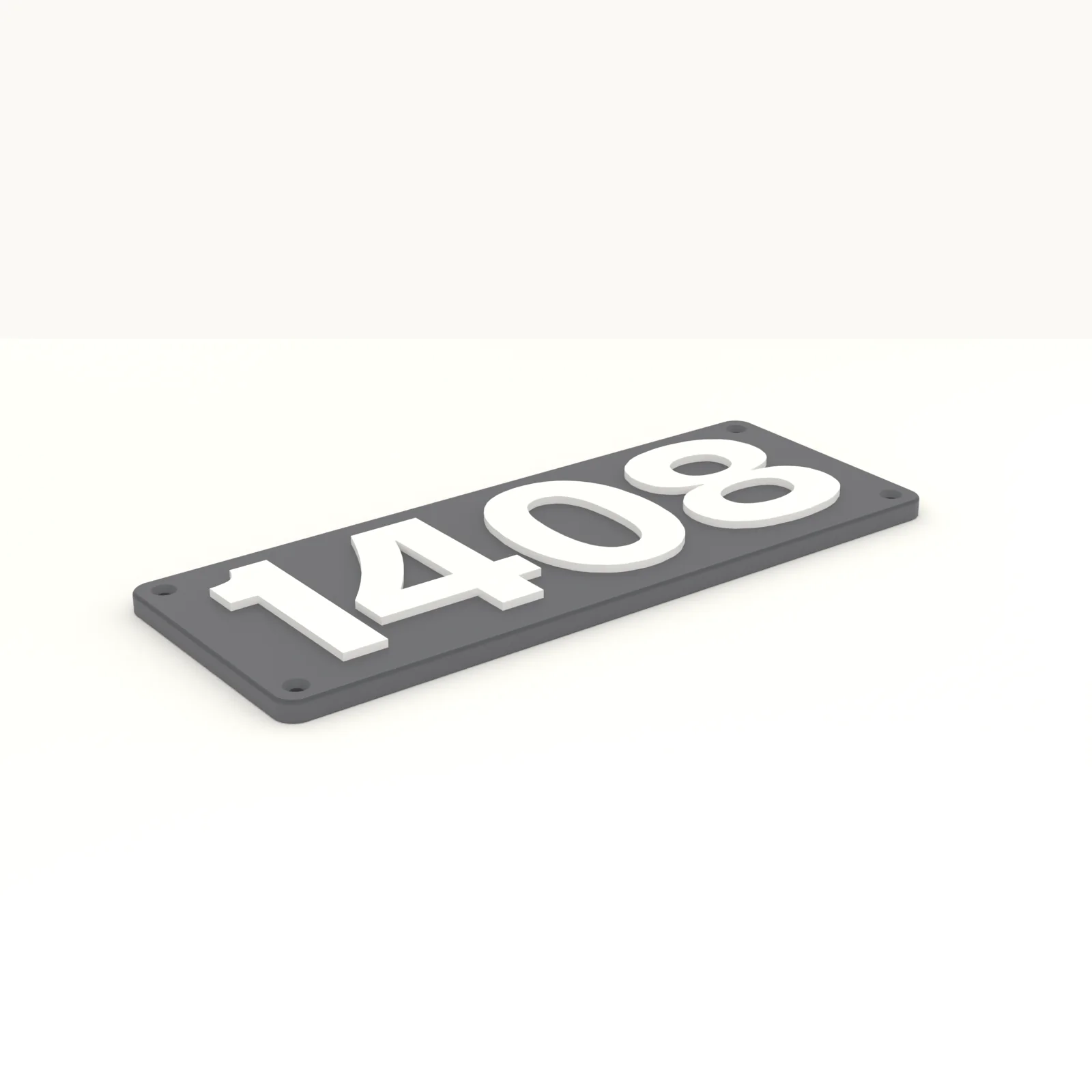
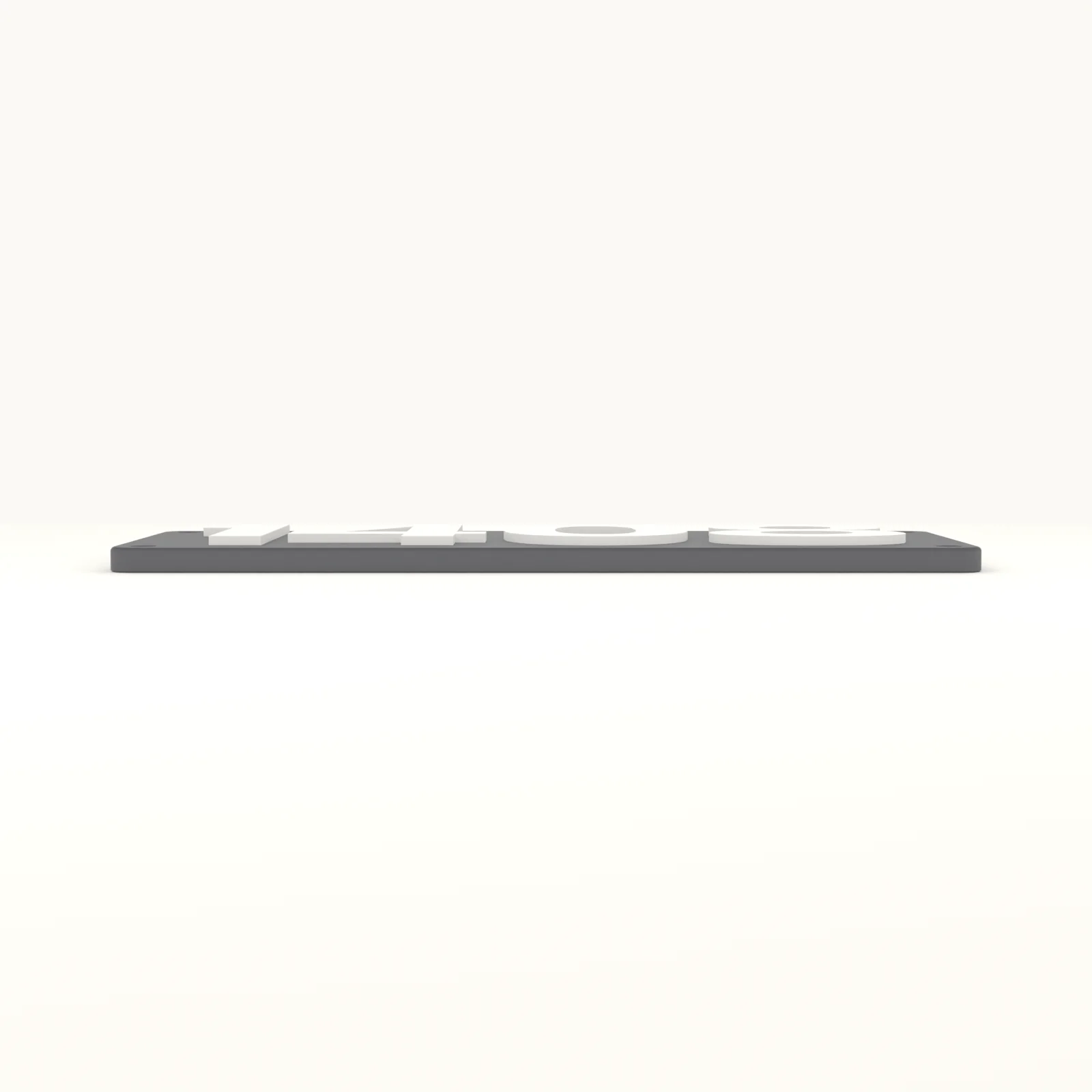
Number Plaque
Up to five big raised digits, up to 120 mm tall, for a locker, a bay, a mailbox post or a shelf.
Materials
Two plastics cover the whole catalog. Here is what each one is good at, where each one fails, and the line we draw on what we make at all.
| PLA | ASA | |
|---|---|---|
| Used for | Everything indoors: plaques, letters, signs, card and token trays, inserts, bins, baseplates, dividers, desk trays | The number plaque, when you choose the outdoor option |
| Starts to soften | about 55 to 60 C, 131 to 140 F | about 95 to 100 C, 203 to 212 F |
| Sun | Fades and can warp over a summer in direct sun | UV stabilized, built for years outdoors |
| Stiffness | High, holds crisp edges | A little more flexible, tougher in impact |
| Finish | Matte, fine layer lines on curves | Matte, fine layer lines on curves |
| Cleaning | Damp cloth, mild soap, cool water | Damp cloth, mild soap, a garden hose |
The softening figures are heat deflection temperatures from filament makers' published data, measured at a light load. They are where a part starts to sag under its own weight or a light push, not where it melts.
PLA is the default for a reason. It is stiff, prints with sharp corners and clean letters, holds dimensions well, and comes in the matte colors we stock: black, white, slate grey and sand, with red and moss for letters. At room temperature a PLA bin, tray or plaque keeps its shape indefinitely.
Its weakness is heat. Around 55 degrees Celsius, 131 Fahrenheit, it starts to soften. A room, a drawer or a desk never gets there. These places can:
Keep PLA pieces out of those spots and they last.
ASA is a weather resistant cousin of the plastic in many car exterior parts. It is UV stabilized, which means it is formulated to hold its color and strength in sunlight for years, and it does not soften until about 95 degrees Celsius. We use it for the number plaque outdoor option, for mailbox posts, gates, sheds and dock boxes.
It costs more and prints slower, in a heated enclosure, which is why it is an option at $29 plus the material upcharge rather than the default. UV stabilized is not UV proof. Over many years any plastic in full sun will fade a little.
If you need another piece in ASA, like a wall plaque on a covered porch that gets afternoon sun, email [email protected] and we will quote it.
Every piece is printed in layers about 0.2 mm thick. Flat faces come out smooth. Curved edges show fine layer lines, which you can see in every product photo; that is the nature of the process and not a defect. The face of a desk name plaque prints against a textured build plate and comes out with an even matte texture.
Dimensions hold within a few tenths of a millimeter on small pieces and about 0.3 percent on large ones. That is why our measured products leave a set clearance, 1 mm each side on bare card trays, 1.5 mm in total on box inserts, 1 mm on baseplates and 2 mm on divider kits. The post on what printed to fit means explains the numbers.
Some things we do not make at any price, and the list is not about difficulty:
When a request falls outside the line, we say so plainly and, where we can, point to what would do the job.
Every piece is designed and printed in our own workshop in the United States. The filament itself is made by established filament manufacturers, mostly overseas, which is why we never call a product made in a particular country. What we make here is the design, the generator that sizes it to you, the print and the check against your numbers.
Up to five big raised digits, up to 120 mm tall, for a locker, a bay, a mailbox post or a shelf.
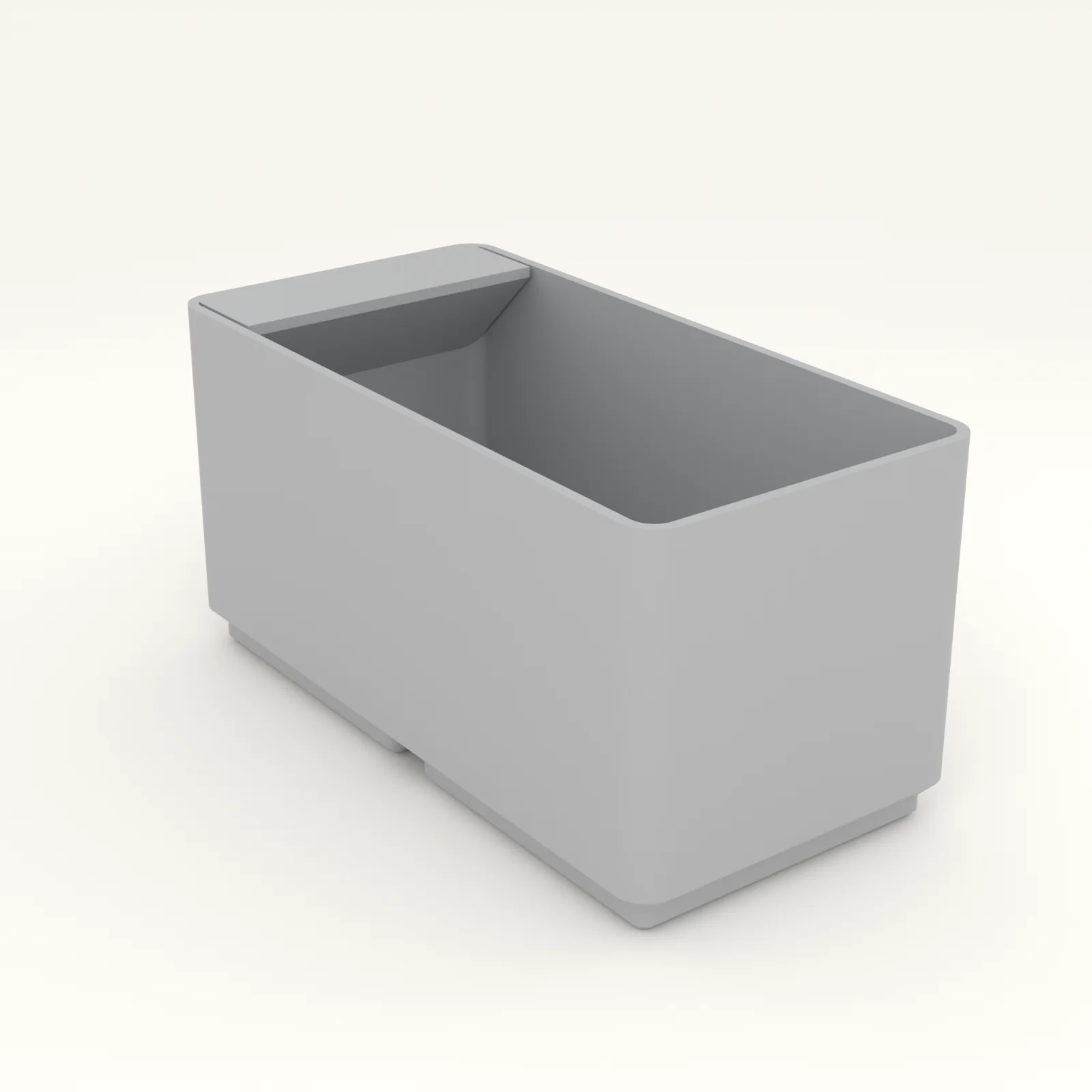
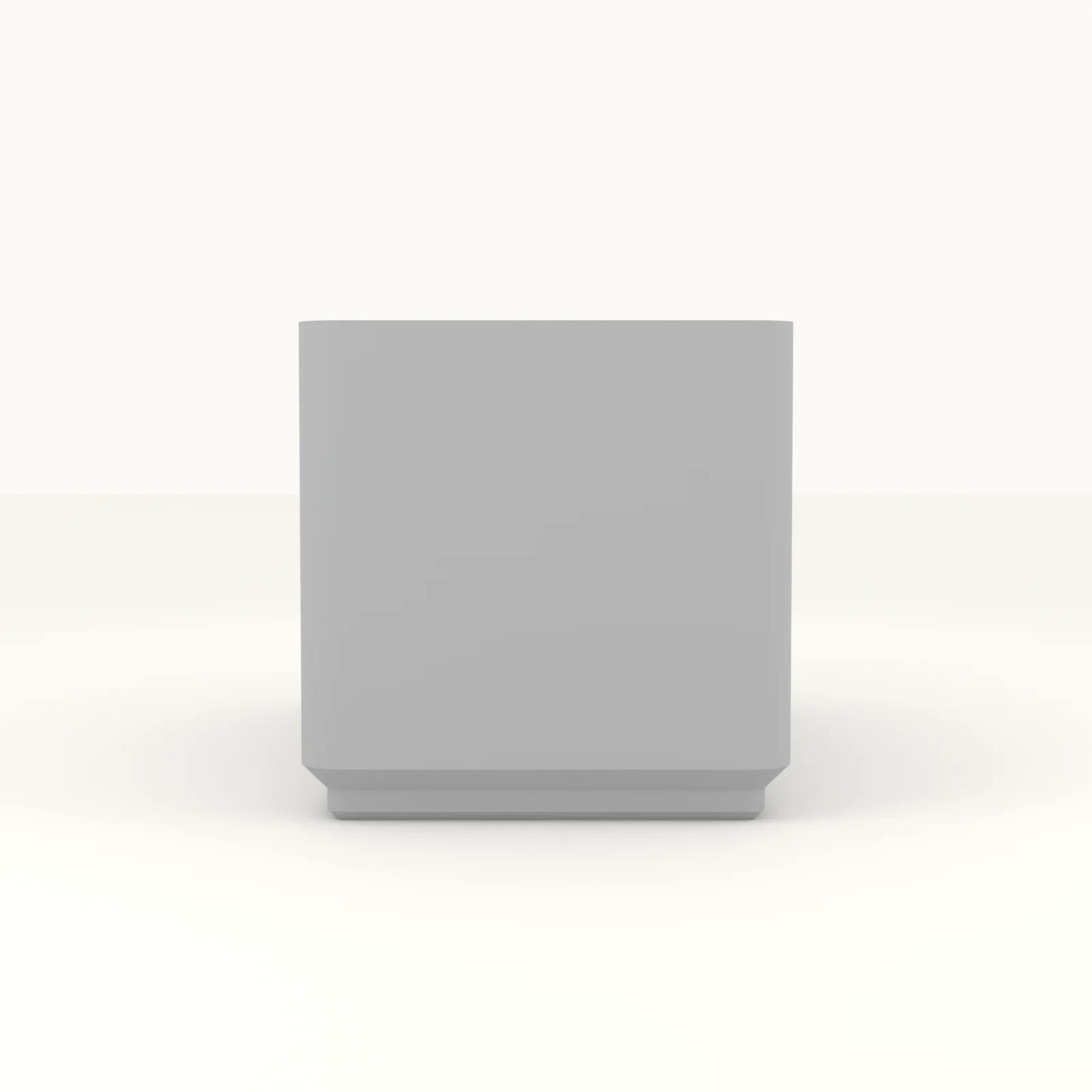
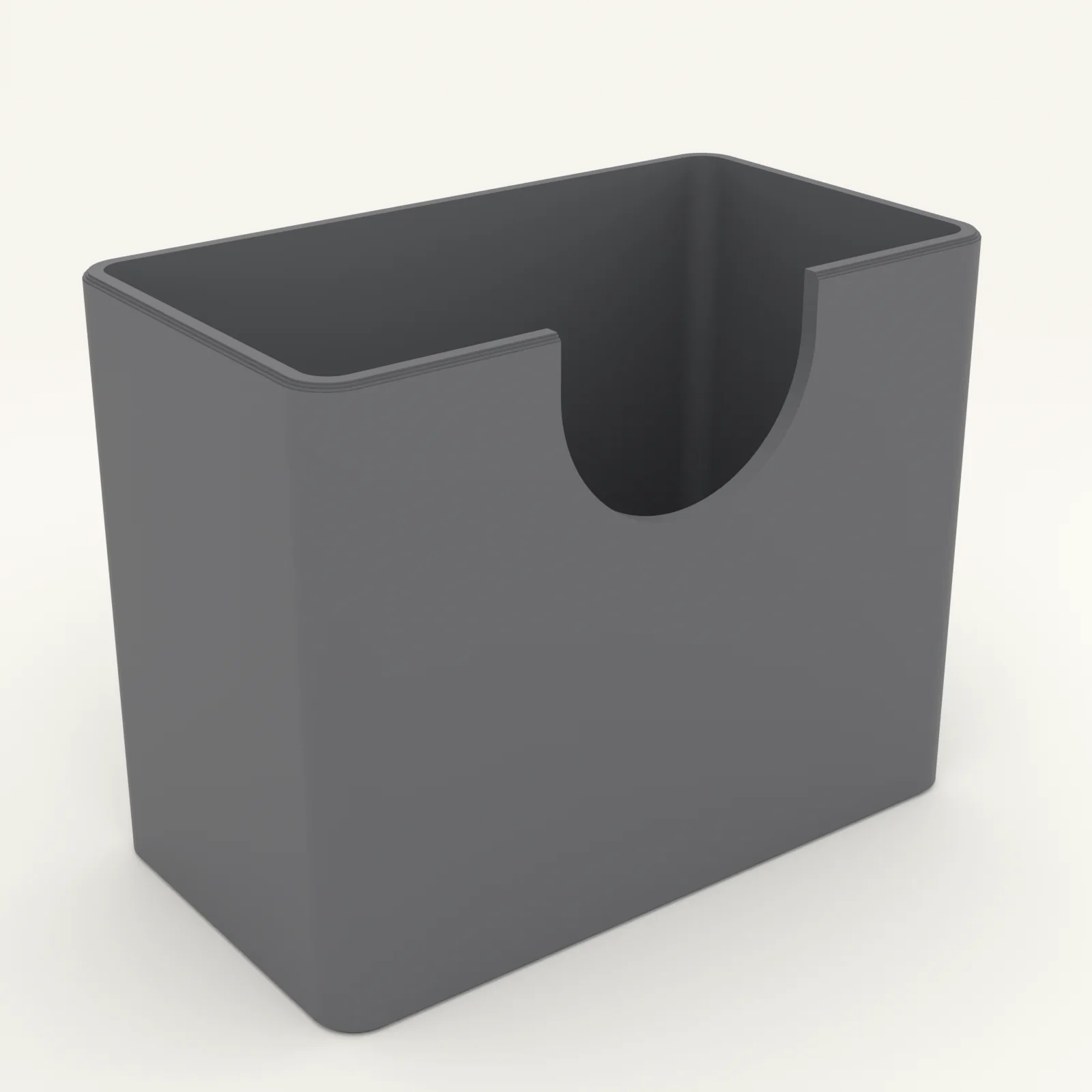
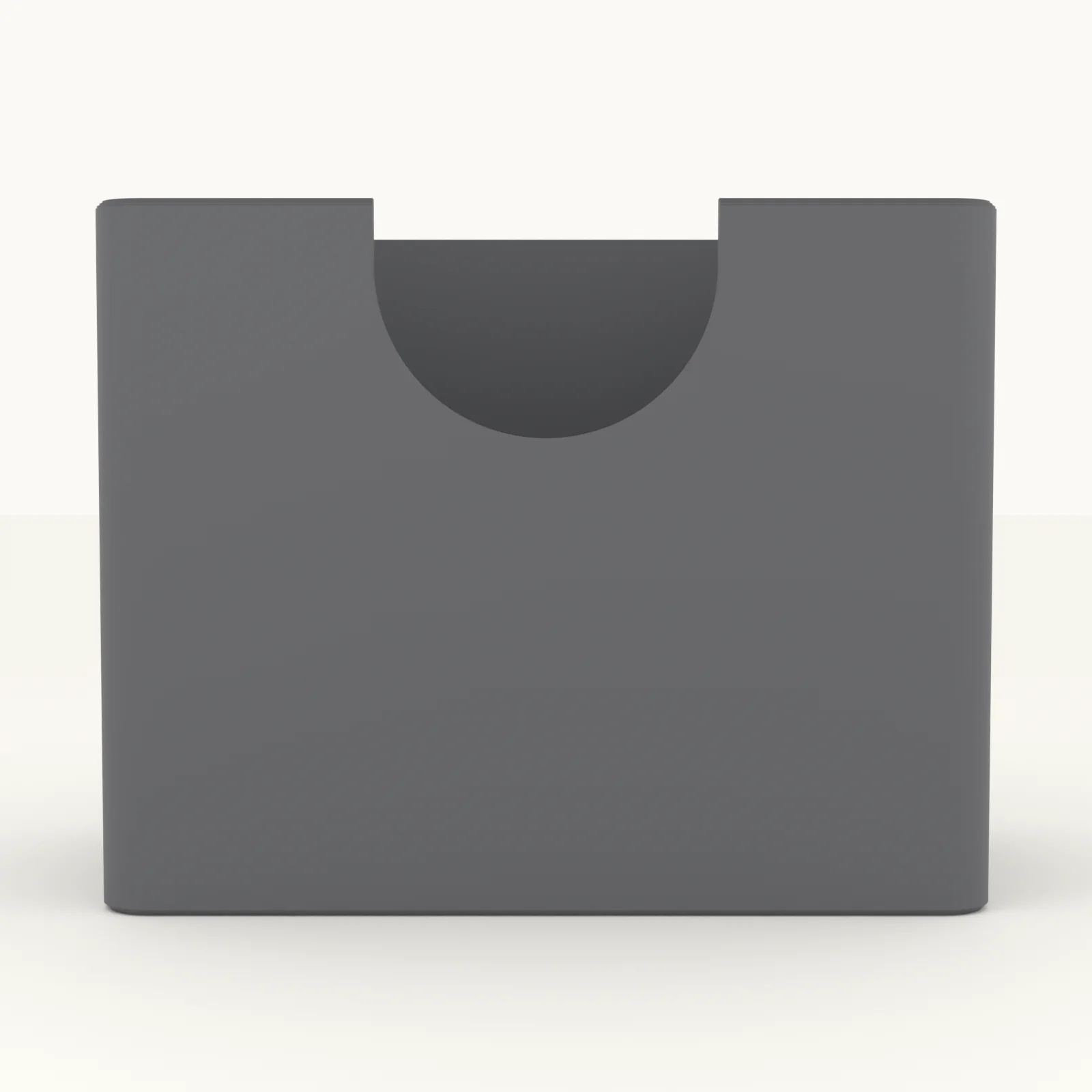
A card tray keyed to your card size and sleeve choice, with a thumb cut for easy pickup.
Yes. PLA is stiff, stiffer than most of the plastics used in molded organizers, and it holds its shape at room temperature for years. Where it falls short is heat and long term sun, not strength.
ASA prints slower in a heated enclosure, costs more and gives off more fumes while printing, so it would raise the price of every piece for a property most indoor pieces never need. We use it where heat or sun is part of the job.
Only in an industrial composter held at high temperature. In a landfill, a backyard compost bin or the ocean it behaves like any other plastic. We do not make environmental claims for it.
Both work. Cyanoacrylate or a construction adhesive bonds PLA to wood or painted board. Acrylic paint takes to a light scuff. Painting is at your own risk on personalized pieces since they are final sale.
Not in the store. If a piece genuinely needs another material, email us and we will tell you whether it is worth a custom quote.
Not sure what to order? Email [email protected] with your measurements and a sentence on what goes in it. A person answers on business days.