Made to your measurements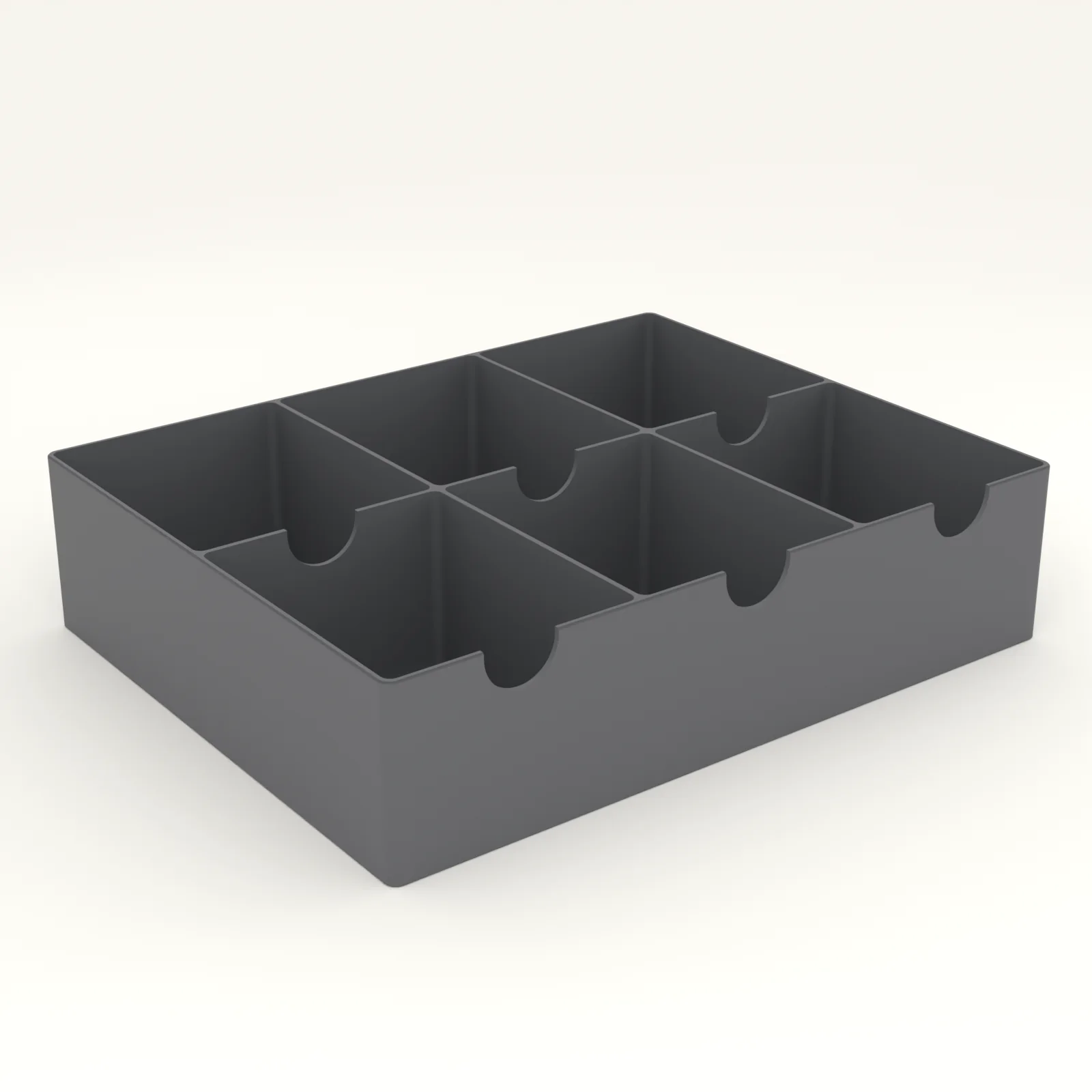
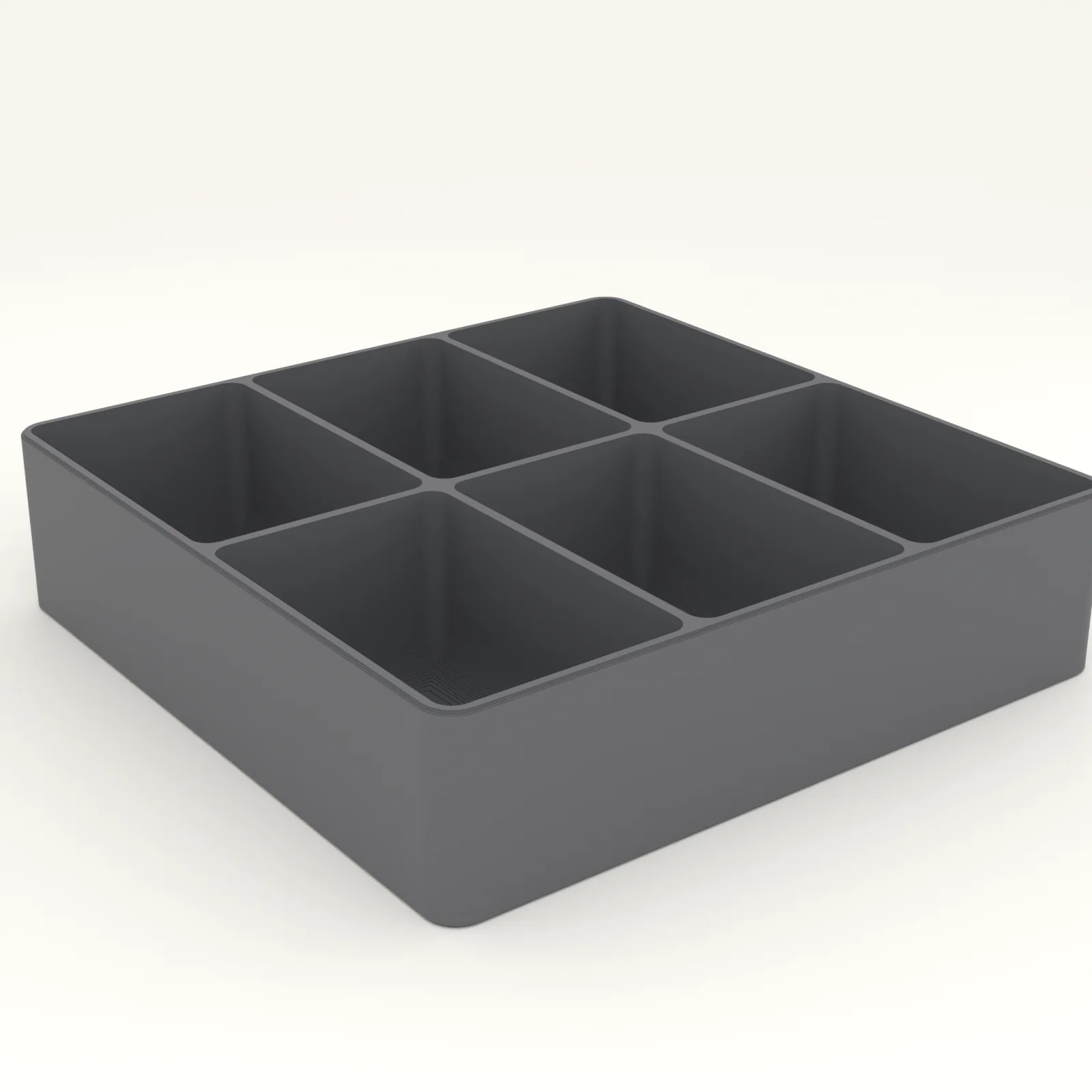
Custom Box Insert
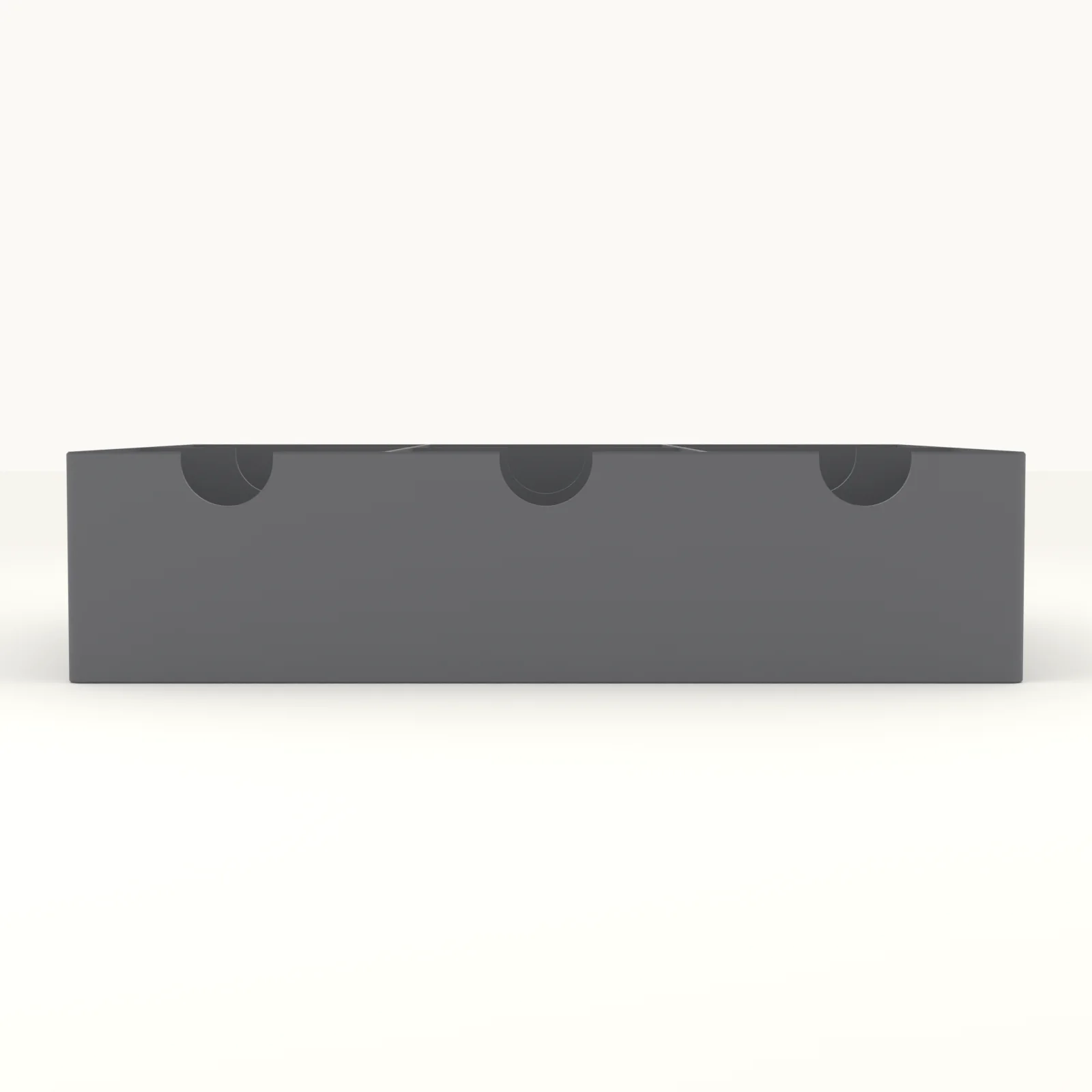
Measure the inside of your box, pick a compartment grid, and we print an insert that drops in.
Guide
The insert is generated from three numbers and a grid. Get the height right and the lid closes flat with the board on top. Here is how.
You need: ruler or tape measure, calipers if you have them, the board and rulebook
A custom box insert needs the inside length, the inside width and the height you want the insert to be. Then two choices: how many compartments across and how many down. That is the whole form. The insert is generated 1.5 mm smaller than your length and width in total, with 1.6 mm walls and a 1.6 mm floor, and a finger cut on every compartment if you want them.
Length is always the longer side. If the box is square, it does not matter which you call which.
Game boxes are made of wrapped board, and the wrap folds over at the top edge. On many boxes the inside is a millimeter or two wider at the rim than at the floor, and the corners have a small fillet of glue and paper. The insert sits on the floor, so measure there, close to the floor but clear of the corner fillets. Measure near each end and keep the smaller reading.
A steel rule or calipers are better than a cloth tape. If you only have a tape, hook it on one wall and read at the other, twice.
This is the number people get wrong, because the lid has to close over everything. Do it this way:
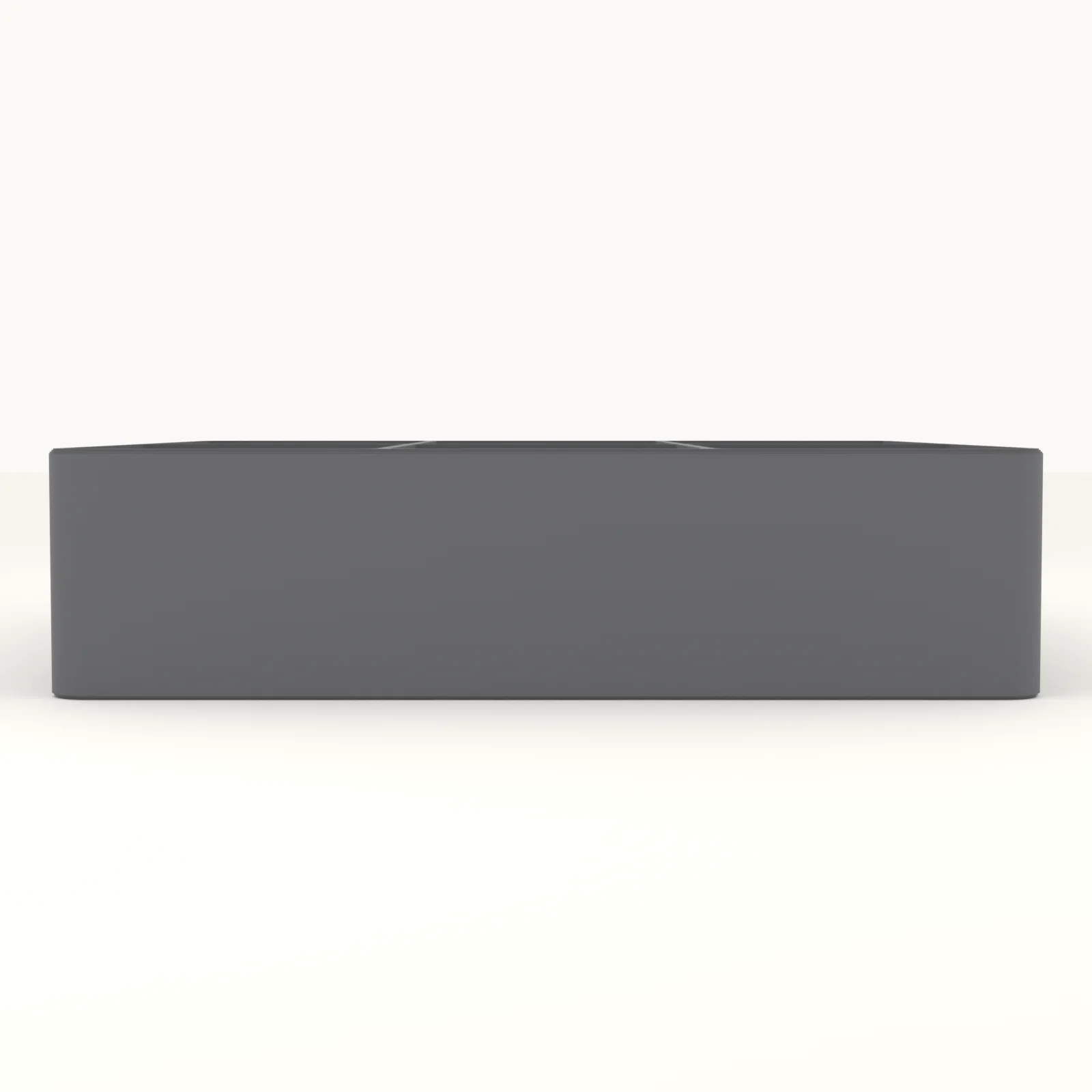
A worked example. A square box measures 288 by 288 mm inside at the floor and 68 mm deep. The folded board is 5 mm and the rulebook 3 mm. The insert height is 68 minus 8 minus 2, so 58 mm. The insert is generated at 286.5 by 286.5 by 58 mm and drops in with room for the board to sit flat on top.
If nothing lives on top, use the full depth minus two millimeters. If the lid is a deep lid that sits down over the bottom, measure the bottom only, not the closed box.
Think in kinds of things, not numbers of things. Cards, money, player pieces, cubes, dice, tiles. Then pick a grid. The compartments are even, so check the biggest item against the compartment size. Here is what a 3 across, 2 down grid gives in a few common inside sizes:
| Inside size (mm) | Grid | Each compartment, about | Good for |
|---|---|---|---|
| 288 x 288 | 3 x 2 | 93 x 141 mm | Standard cards on edge, big token piles, boards of tiles |
| 288 x 288 | 4 x 3 | 69 x 93 mm | Player color sets, money, small cards flat |
| 220 x 150 | 3 x 2 | 71 x 72 mm | Dice, cubes, small tokens |
| 300 x 200 | 5 x 2 | 58 x 97 mm | Five player sets with room for score markers |
The arithmetic, if you want to check your own: each compartment is the insert length, minus one wall for every compartment plus one, divided by the number of compartments. The walls are 1.68 mm as printed.
A box with a lot of cards usually works best with card trays in your card size beside a smaller insert, because a tray keeps the cards on edge with a thumb cut and lifts out to the table. Measure the box, decide where the trays go, and enter the remaining space as the insert size. A standard card tray at 100 cards is about 69 mm wide and 38 mm long unsleeved. The card size guide has every size.
A token tray is the off the shelf alternative for small pieces. It comes in 120 by 120, 160 by 160 and 200 by 160 mm footprints with 4 to 12 scooped compartments, so check whether one of those footprints drops into the space before you order a custom insert.
Write the three numbers down and read them back. Check that the height is the insert height, not the box depth. The custom insert ships within 7 business days and starts at from $29, with the price updating as you type. If it does not fit the numbers you entered, it is remade free under the fit guarantee.
Measure the inside of your box, pick a compartment grid, and we print an insert that drops in.
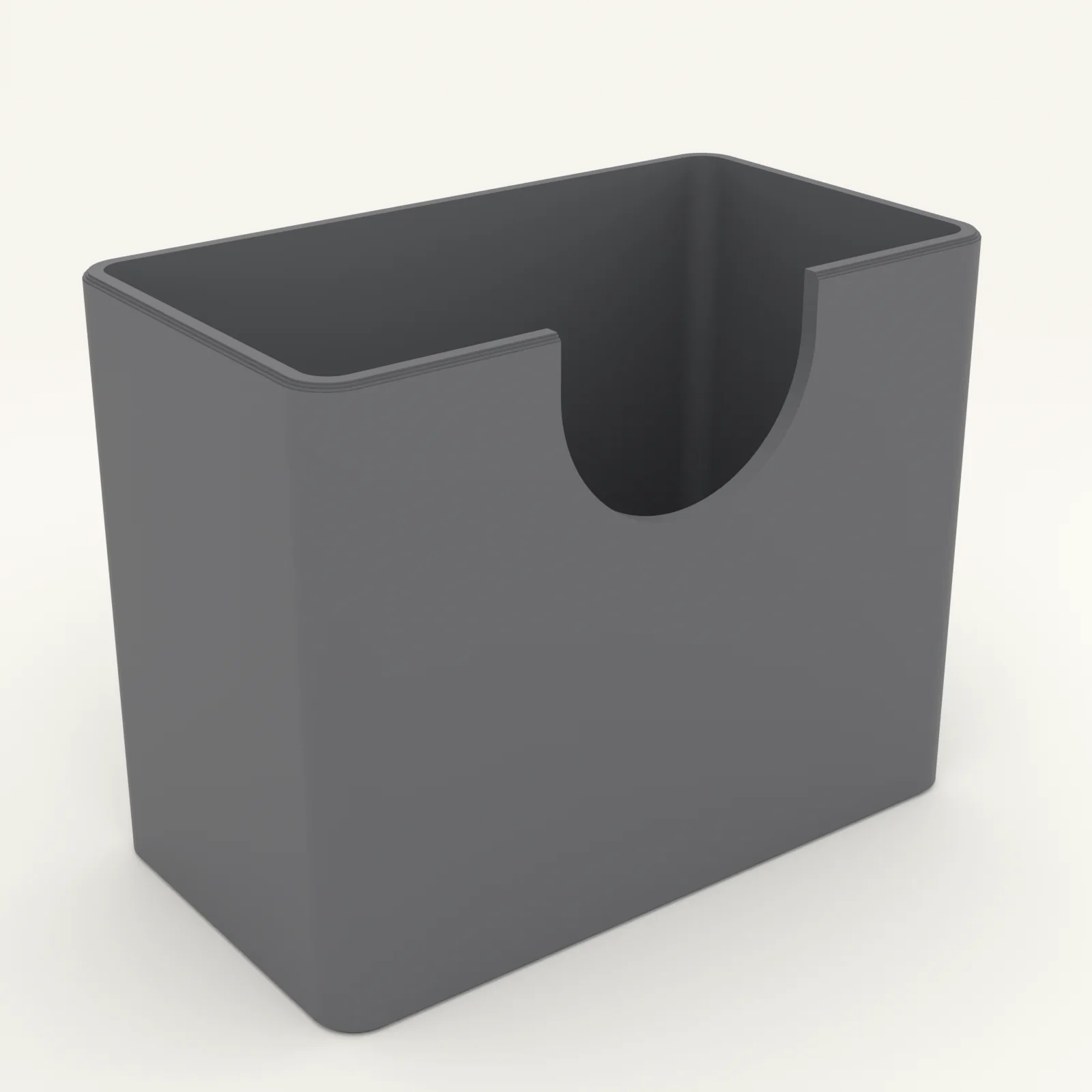
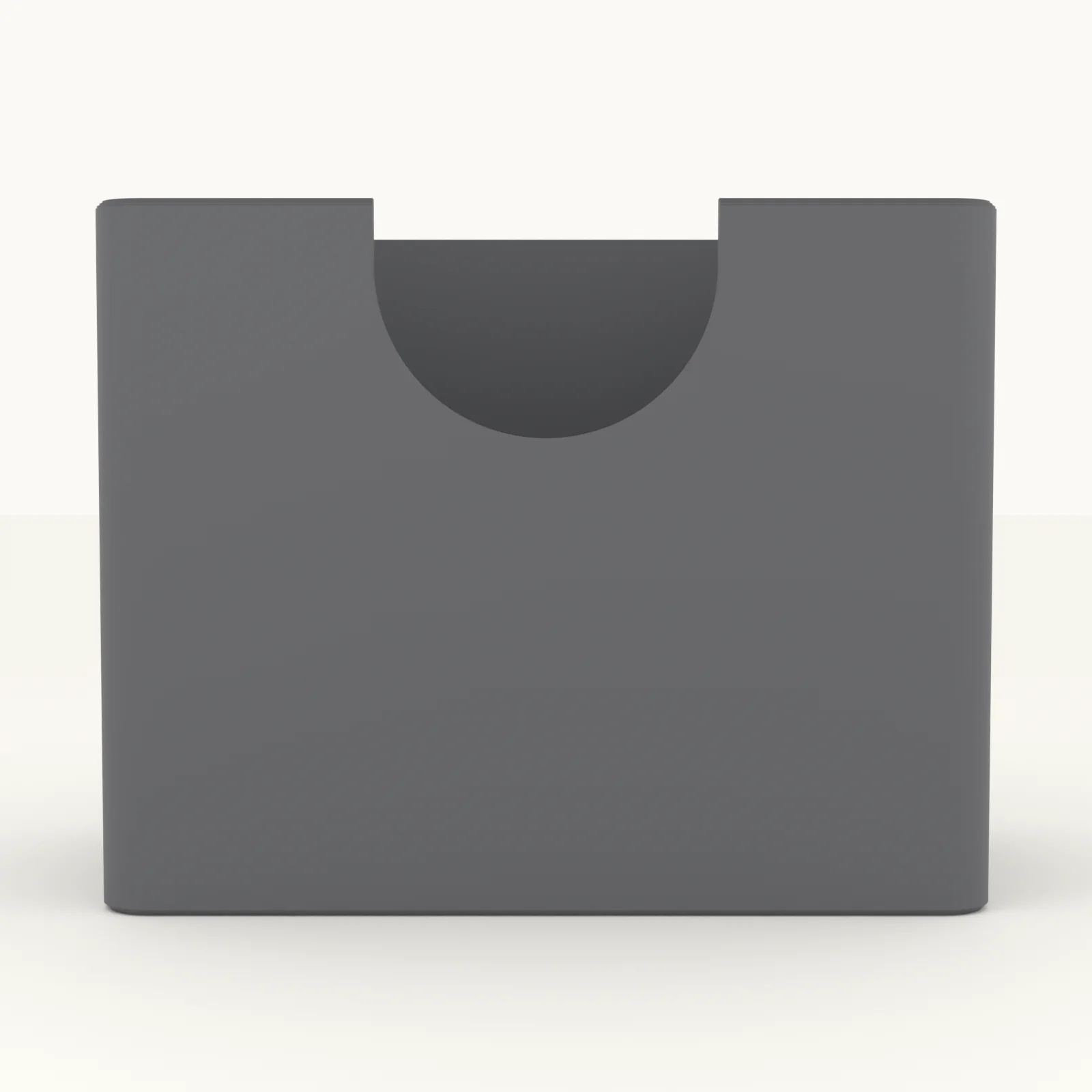
A card tray keyed to your card size and sleeve choice, with a thumb cut for easy pickup.
No. The insert is made from the box measurements you enter, so it fits your copy of the box, with your sleeves and your expansions. We never need the title.
The configurator takes inside lengths and widths from 80 to 300 mm and insert heights from 20 to 120 mm, which covers most game boxes. For a bigger box, email us the three measurements. Inserts over 300 mm print as sections keyed together with dovetails in the floor, with the seam through the middle of a compartment so it sits in open floor.
The insert is generated 1.5 mm smaller than your length and width in total, so about three quarters of a millimeter each side. That absorbs print tolerance and a box that is slightly out of square.
If it sits under or beside the insert, measure the space that is left after it, and enter that as your inside size.
About 20 mm in each direction. If your grid would make compartments smaller than that, the order is held and we email you to choose fewer compartments.
Not sure what to order? Email [email protected] with your measurements and a sentence on what goes in it. A person answers on business days.